Optimistic Sentiment but Cautious Spending 📬 Deep Dive Korea Vol. 11 : Insights on the Korean Consumer Market
In 2025, the Korean consumer market saw a mix of psychological relief and tightened spending.
The Consumer Sentiment Index reached a 5-year high in the first half of the year as political uncertainties settled. Yet, high prices and rising living costs made consumers hesitant to actually open their wallets.
In today’s newsletter, we dive into two key topics:
-
Article 1: We analyze the latest consumer data to understand the gap between optimistic sentiment and cautious spending.
-
Article 2: We break down the 2025 import market by category to see which affordable product lines are gaining traction.
We hope these insights offer helpful guidance for global brands and local distributors navigating today's unpredictable market.
|
|
|
The Rise of Practical Brands in Korea: 2025 Market Insights
|
|
|
Article 1. 2026 Consumer Trends by the Numbers
1. Rising Prices for Daily Goods Fuel the Value-Driven Trend
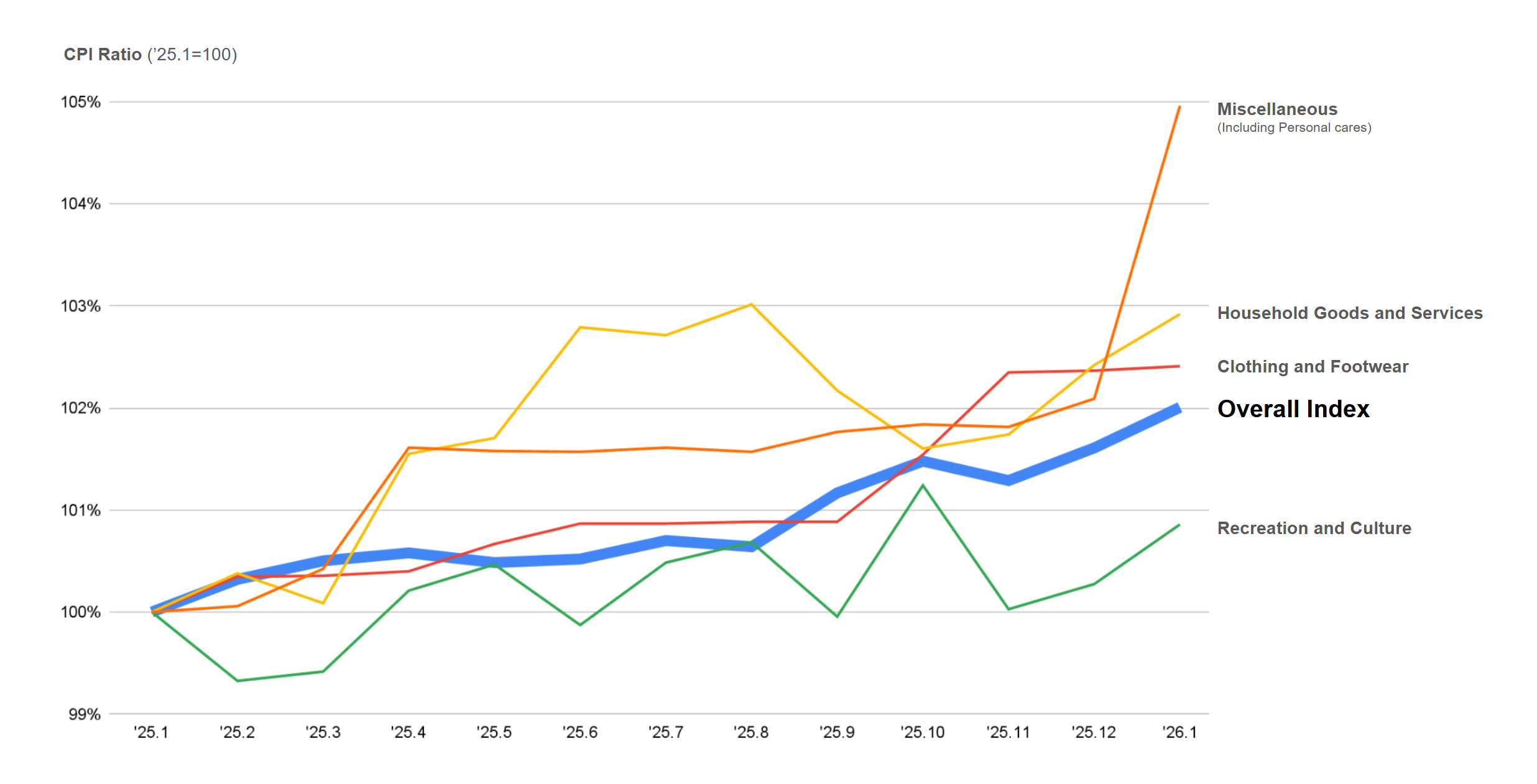
Overall inflation was relatively light in 2025, with the Consumer Price Index (CPI) rising by just 2.0%. However, for everyday consumer goods, it was a different story. Prices in specific categories easily outpaced the average: personal care products (including cosmetics) went up by 5.0%, home goods by 2.9%, and apparel and footwear by 2.4%.
As consumers feel the pinch on these daily items, they are prioritizing real, practical value over brand names. Looking ahead, the shift toward budget-friendly choices—like private label brands from retailers and affordable imported brands—will only become more pronounced. |
|
|
⬇️ Monthly Consumer Price Trends in 2025 (Focus on Consumer Goods Categories) |
|
|
2. The Squeeze on Disposable Income and the Real Drop in Spending
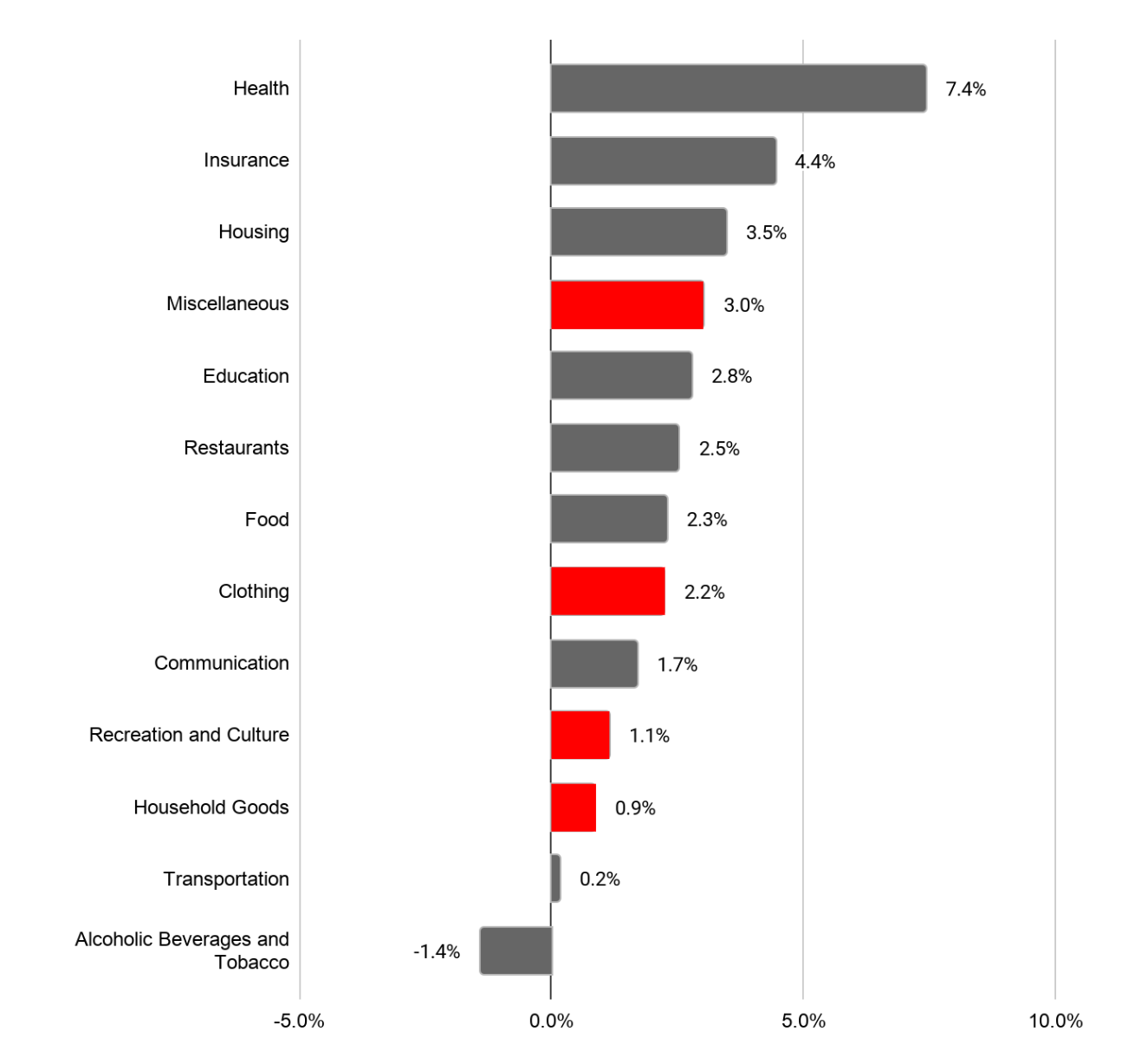
Average household spending grew by 2.6% compared to last year. However, this increase was mostly due to unavoidable "essential fixed costs" like healthcare, insurance, and housing. On the flip side, spending growth on consumer goods—like apparel, home items, and leisure—lagged behind the average.
Here is the key takeaway: while prices rose, but spending didn't keep pace. This tells us shoppers are either buying less volume or switching to budget-friendly alternatives. In short, higher fixed costs mean less disposable income, leading to a tangible slowdown in the consumer goods market. |
|
|
⬇️ 2025 YoY Shifts in Household Expenditure by Purpose |
|
|
3. Political Stability Brings a Wave of Consumer Confidence
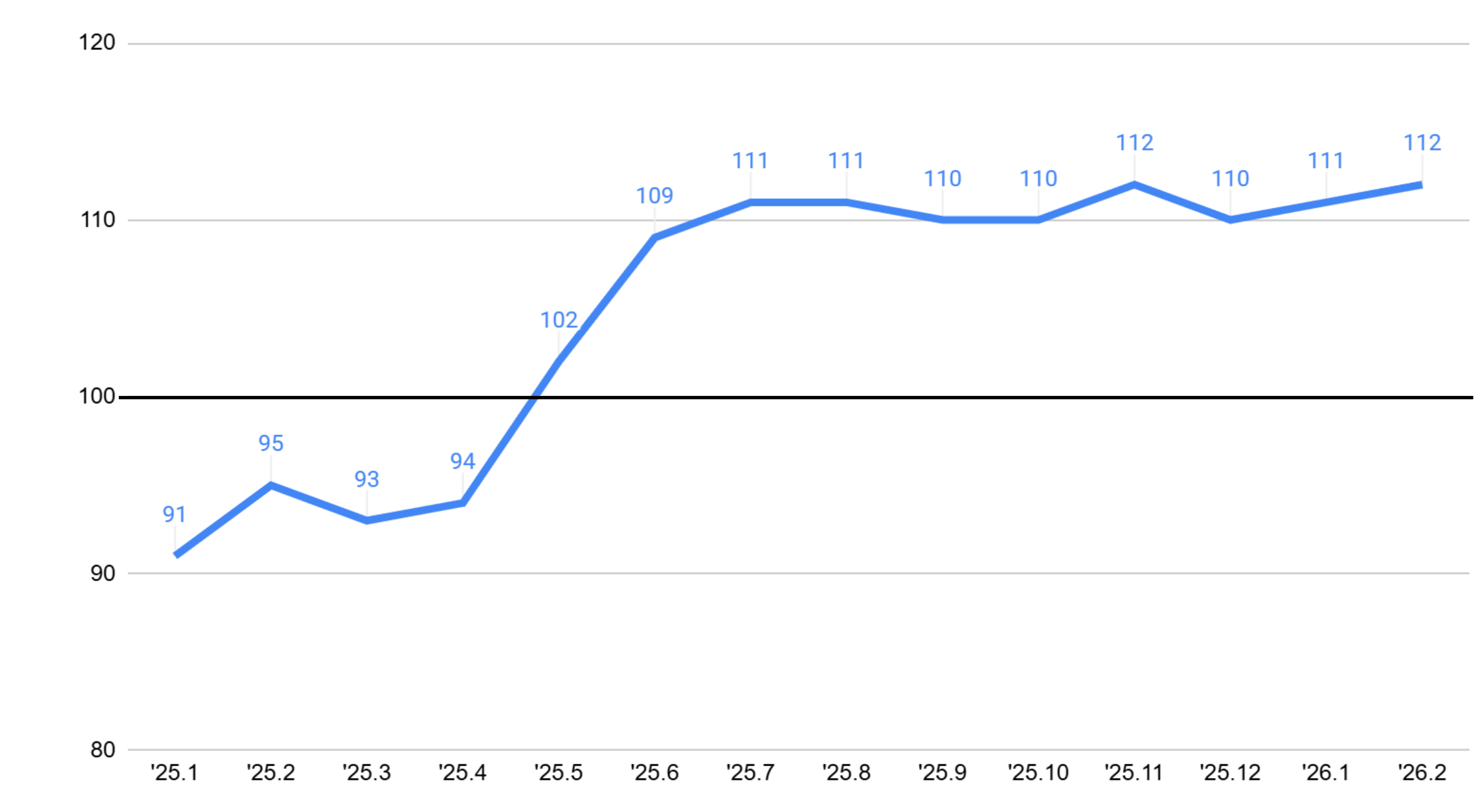
Even with tighter budgets, consumer sentiment remains surprisingly high. After crossing the 100 point threshold in May 2025, the index has hovered above 110 for eight consecutive months - hitting a five-year high in optimism.
However, this isn't because the economy suddenly skyrocketed. Rather, it's largely driven by the political and social stability that settled in after the presidential impeachment and election, giving consumers a much-needed psychological boost. |
|
|
⬇️ Consumer Sentiment Index |
|
|
The Potential Shift from Value-Driven to 'Survival-Mode' Consumption
Right now, the market is caught between optimistic sentiment and tightened real-life spending. The psychological data looks great, but out in the real world, high fixed costs and inflation have made shoppers incredibly conservative and value-focused.
Add to this recent global unrest and the threat of rising oil prices, and the Korean market is bracing for a hit. Higher oil prices mean higher shipping and production costs for imports, which could push everyday prices even higher. Soon, Korean consumers might go beyond just hunting for bargains and shift into a survival mode, cutting back their spending to the absolute minimum.
Because of this, the safest bet right now is to prepare for a spending slowdown rather than a boom. On the marketing front, shifting your messaging to highlight "essential practicality" instead of a "premium image" will likely resonate much better with today’s cautious buyers. |
|
|
Article 2. 2025 Trends in the Consumer Goods Import Market
1. Import Market Growth by Sector
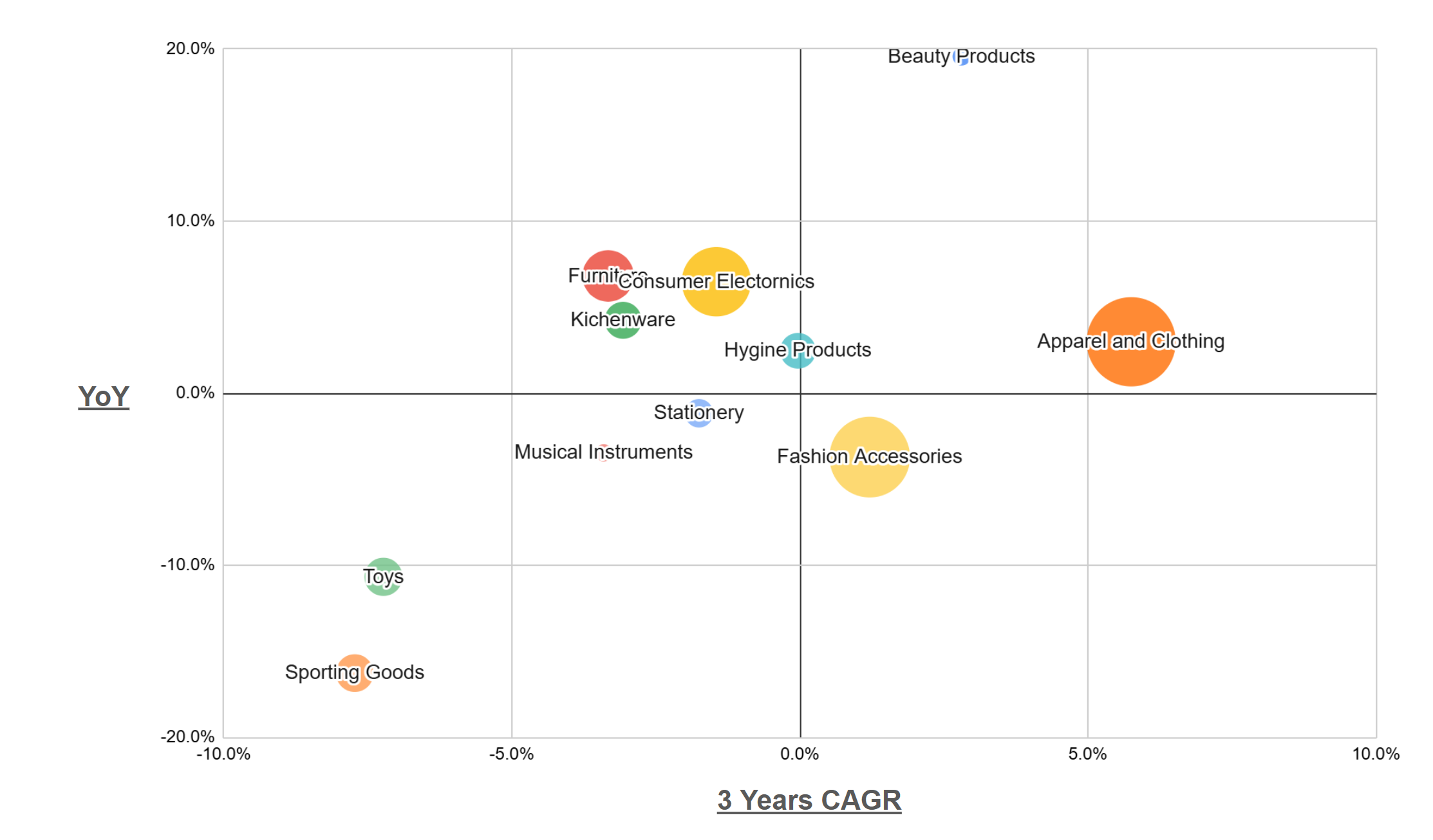
Here at Deep Dive Korea, we’ve been tracking import trends across 11 different sectors and 107 consumer goods categories. The graph below breaks down the growth trajectory for each area, showing the 3-year average growth rate on the X-axis and the year-over-year growth on the Y-axis.
Overall, the data clearly shows a growing trend toward conservative, practicality-driven consumer habits. |
|
|
⬇️ Consumer Goods Import Market Shifts by Sector |
|
|
A Clear 'Lipstick Effect' in Action
Beauty products saw an overwhelming 19.6% year-over-year growth, marking the sharpest surge across all categories. This points to a classic recessionary trend: with tighter budgets, consumers are swapping out big-ticket luxury purchases for "small indulgences" that offer psychological satisfaction at a fraction of the cost.
Cuts in Discretionary Spending
The steep decline in sporting goods (-16.3%) and toys (-10.7%) is highly noticeable. This perfectly aligns with the 'survival-mode' spending trend discussed earlier. It clearly shows that when fixed costs and inflation rise, non-essential categories like outdoor activities and hobbies are the very first on the chopping block.
A Rebound for Indoor Living Goods
Home appliances (6.5%), furniture (6.8%), and kitchenware (4.2%) successfully bounced back over the past year after three years of negative growth. This could reflect a natural replacement cycle for essential durable goods. Alternatively, as consumers cut back on going out to save money, they are likely investing more in practical items that make their time at home more comfortable. |
|
|
2. Practicality Overtakes Aesthetics in Kitchenware
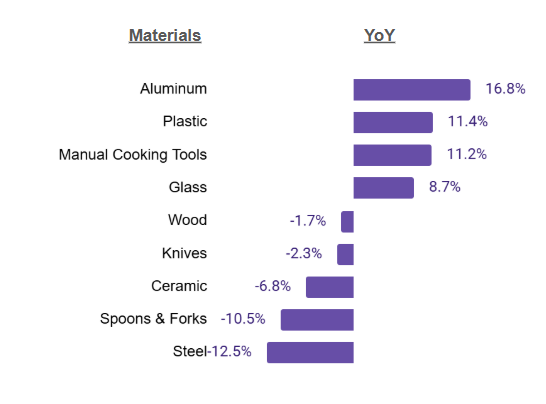
Among the 11 consumer goods sectors, the shifts in the kitchenware market are particularly interesting. Even within the detailed sub-categories, the diverging consumer choices driven by the economic downturn are clearly visible. |
|
|
⬇️ YoY Changes in Kitchenware Import Market by Sub-category |
|
|
An Overwhelming Victory for Value and Practicality (Aluminum, Plastic, Glass)
The most striking trend is the double-digit growth of aluminum and plastic. These materials are generally very affordable, lightweight, and easy to maintain. As consumers tighten their belts, it is highly likely they are opting for highly practical and cost-effective materials over heavy, expensive premium tableware.
The Decline of Premium and Aesthetic Consumption (Ceramics, Wood)
Materials like ceramics and wood, often bought for beautiful plating and adding an aesthetic touch to home interiors, saw negative growth. This aligns with our earlier analysis. As budgets shrink, consumers seem to be cutting back first on items meant to satisfy 'emotional' needs rather than essential functions.
The Rise of Home Cooking to Defend Living Costs (Manual Kitchen Tools)
The strong growth of manual cooking utensils (11.2%) appears to be a result of efforts to manage the burden of dining out. As people cook at home more frequently to save on food expenses, the demand for basic, practical cooking tools has naturally increased.
Delayed Purchases for Long-Lasting Items (Steel, Cutlery, Knives)
Steel materials, cutlery (spoons/forks), and knives showed the sharpest decline. These are highly durable goods that are typically used for years until they break. In an uncertain economic climate, consumers seem to be maximizing the lifespan of their existing items and delaying the purchase of replacements. |
|
|
💡 Wrapping Up: Focus on Survival and Practicality |
|
|
In the near term, we advise caution regarding aggressive market expansion or premium brand positioning. The clear consumer preference for lightweight plastics over aesthetic ceramics serves as a definitive market signal. Focusing on essential, everyday utility rather than elaborate packaging will be your most reliable strategy.
Although the duration of this economic uncertainty remains unclear, historical trends remind us that crises consistently breed opportunity. We trust these insights will support your strategic agility and market success. |
|
|
Enjoyed this newsletter?
📬 Subscribe now!
We're taking a short break to recharge.
See you again on April 15, 2026!
We’d love your feedback!
|
|
|
Want to Share This Newsletter?
Just copy and paste the URL below
|
|
|
EDWORK
hello@edwork.jp | 4F, Tower B, 50, Jong-ro 1-gil, Jongno-gu, Seoul, 03142
|
|
|
|
|