📬 Deep Dive Korea Vol. 10: MUJI
MUJI is growing rapidly worldwide. By 2025, their global sales reached over 7 trillion KRW (approx. $5 billion). This is a 58% increase compared to just three years ago. What is truly impressive is their popularity in neighboring countries like Korea and China, not just Japan. This proves that MUJI’s unique brand philosophy works across different markets.
Their 20-year journey in the Korean market was not always smooth. However, whenever they faced a crisis, they did not rely on quick fixes. Instead, they solved problems by focusing on their brand essence. In this issue, we review MUJI’s 20-year history and their strategy for overcoming challenges.
We hope you gain valuable insights for growing a brand in the Korean market.
|
|
|
MUJI's 20 Years of Survival in Korea
|
|
|
1. The Story of MUJI: The Origin of Minimalism
MUJI is a lifestyle brand from Japan that now sells over 7,000 items, including clothes, food, furniture, and appliances. The name "MUJI" (Mujirushi Ryohin) literally means "No-Brand Quality Goods."
They rejected the culture of buying expensive items just to show off big logos. Instead, they decided to focus on the true value and purpose of the product itself.
MUJI started in 1980, when Japan’s economy was booming and flashy luxury brands were popular. Despite this trend, they have kept their philosophy of "emptiness" for over 40 years. As the pioneer of modern "minimalism," MUJI continues to inspire countless brands today. |
|
|
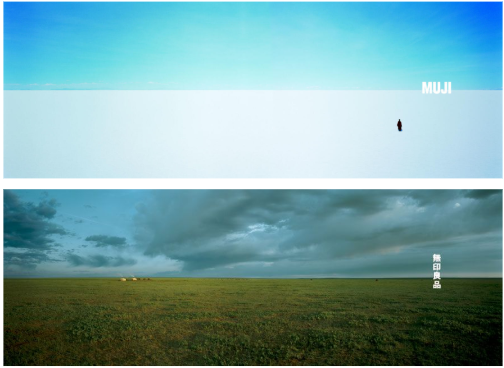
⬇️ MUJI's 2003 "Horizon" Poster. This poster captures the philosophy of MUJI. Through the vast horizon and empty space, it conveys a message of finding a full life within simplicity. |
|
|
MUJI’s design philosophy is captured in the phrase, "This is enough."
When you walk into a store, you see calm colors like white, gray, and beige, along with simple products that have no logos. Instead of showing off strong colors or trendy features, their products aim to naturally blend into your daily life.
The core of their design is to provide items that are comfortable and "just right" for everyday use. They let the quality speak for itself, rather than using flashy advertisements to attract customers.
|
|
|
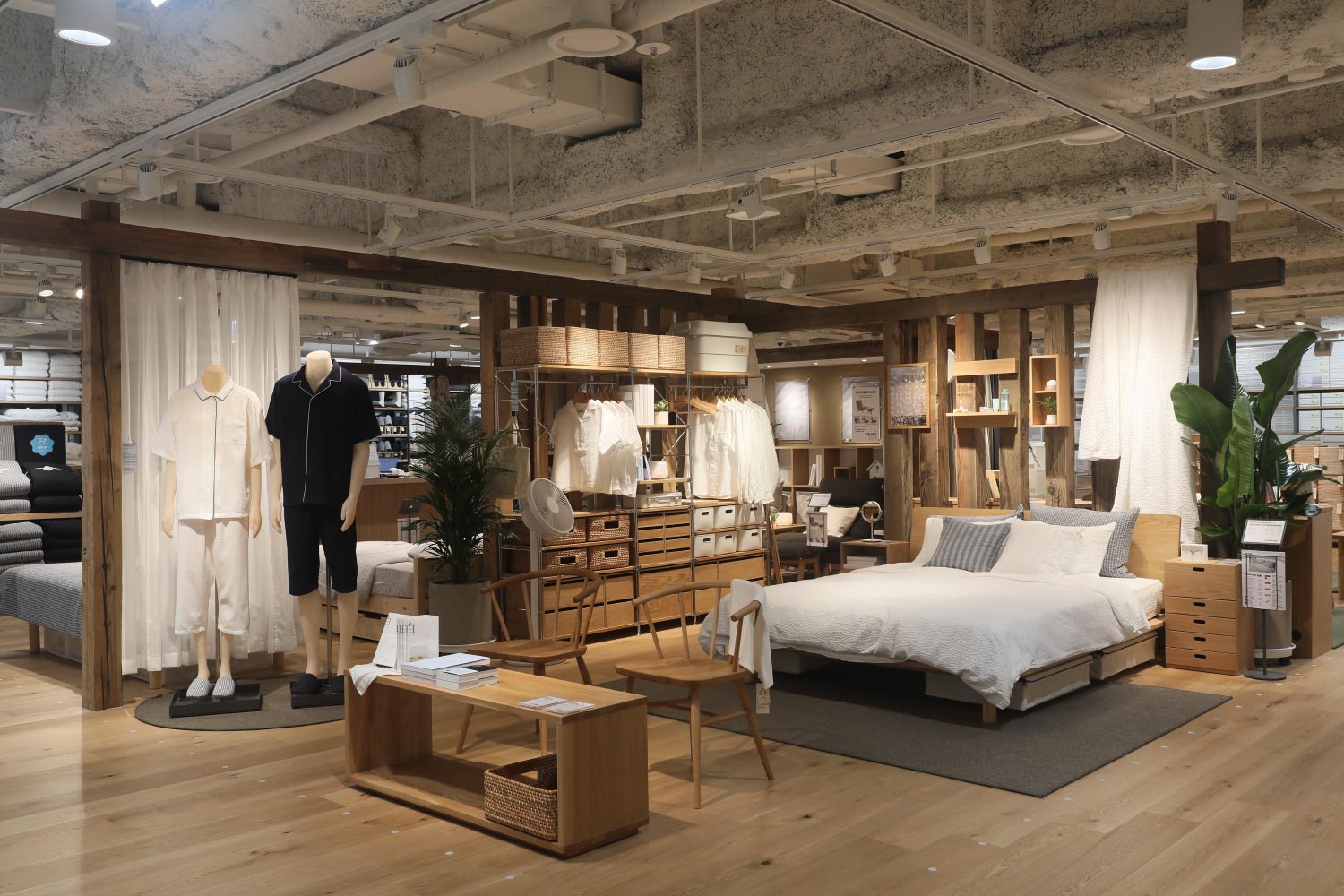
⬇️ Inside the MUJI Store. The store interior reflects MUJI's philosophy of simplicity, featuring natural wood textures and neatly organized displays that create a calm and welcoming atmosphere. |
|
|
This philosophy is supported by a detailed operational system. Their famous manual, "MUJIGRAM," is massive, with over 1,600 pages. It explains everything in detail, from how to dress mannequins to the exact angle for bowing to customers.
This might seem too strict at first, but it is done to focus on the basics. Former Chairman Matsui emphasized, "We automate 90% of routine work with manuals so we can use the remaining 10% of our energy to make customers happy."
Moreover, this manual is not just orders from the headquarters. It is constantly updated based on feedback from the staff working in the stores.
|
|
|
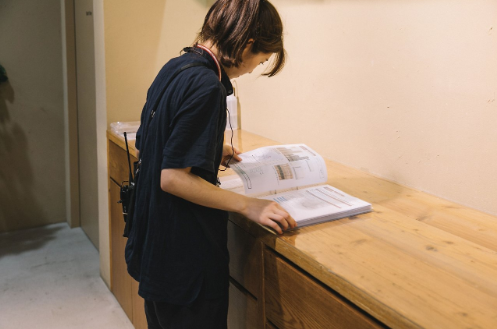
⬇️ A staff member checking the "MUJIGRAM" manual while working at the store. (Srouce: The Unitas) |
|
|
MUJI’s "emptiness" is not just simple design. Behind the simple look, there is deep thinking and a strict system. This is the power of MUJI. It turned "minimalism" into a culture and has been loved for over 40 years. |
|
|
2. 20 Years in Korea: Sticking to Core Values in Crisis
MUJI entered the Korean market in 2004 by establishing "MUJI Korea" with Lotte International. MUJI owned 60% of the shares, while Lotte owned 40%. MUJI provided the brand and operational know-how, and Lotte handled store locations, logistics, and marketing. This structure shows that MUJI considered the Korean market very important from the very beginning.
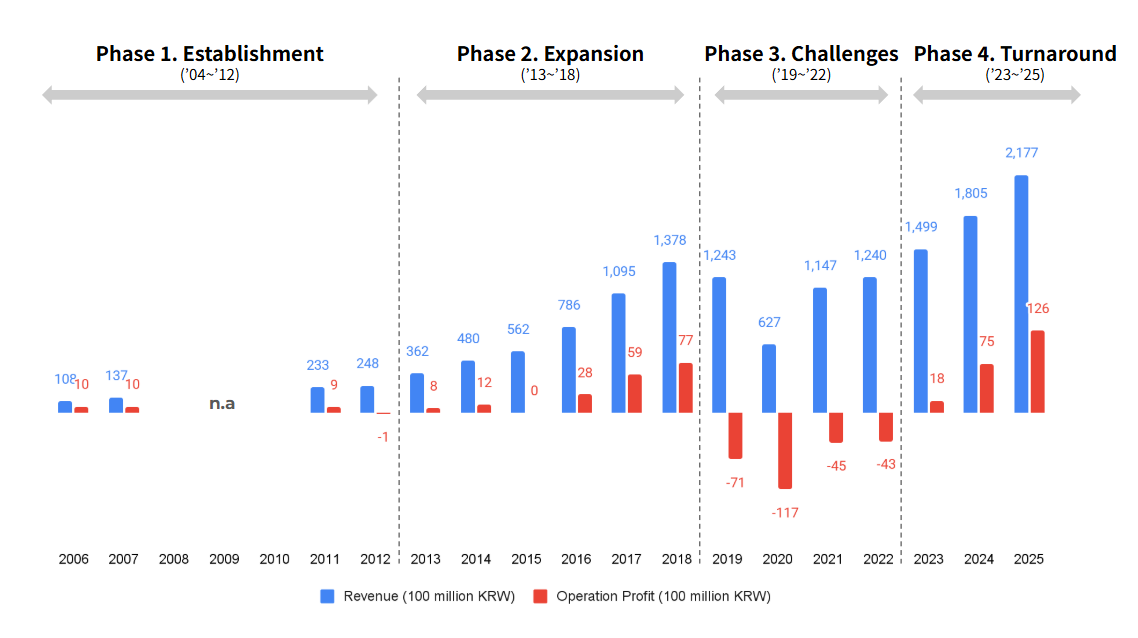
However, the journey over the last 20 years was not smooth. MUJI faced initial rejection due to high prices, followed by massive financial losses from the COVID-19 pandemic and the "No Japan" boycott. On top of that, they had to survive fierce competition from local rivals backed by major Korean conglomerates.
What is surprising is that MUJI did not lose its focus during these crises. Instead, they went back to the basics and strengthened their internal foundation. Just like the saying, "The ground hardens after rain," they grew even faster after overcoming these difficulties.
MUJI’s 20-year history in Korea can be divided into four main periods.
|
|
|
⬇️ MUJI Korea's financial performance history (Source: MUJI)
* The 2020 figure covers only JAN to AUG due to a change in the fiscal year |
|
|
Phase 1 (2004–2012): The Settlement Period
"The Gap Between Philosophy and Reality"
MUJI’s entry into Korea created a lot of buzz. Thanks to the philosophy of famous designer Kenya Hara, the brand became very popular among designers and trendsetters. Using MUJI products was seen as a sign of "sophisticated taste," and the brand became famous quickly.
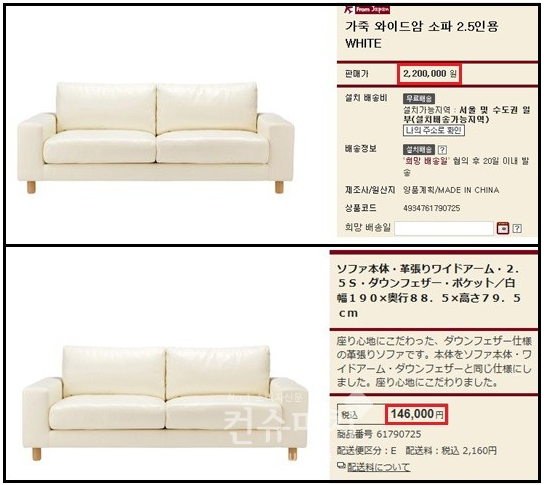
However, high popularity did not lead to good sales results immediately. The biggest barrier was the price. In Japan, MUJI was known for affordable daily necessities. But in Korea, products were 1.5 to 2 times more expensive due to logistics costs and tariffs.
Even customers who visited the stores because they liked the brand philosophy were disappointed. They complained, "You claimed to remove the unnecessary extras (bubbles), but the price itself is a bubble." Because of this price issue, MUJI struggled to become a mass-market brand during this period. |
|
|
⬇️ An article comparing the price difference of the same product between Korea and Japan (Source: Consumuch) |
|
|
Phase 2 (2013–2018): The Growth Period
"Breakthrough Through Structural Change, Not Quick Fixes"
Starting in 2013, MUJI made bold changes to its fundamental business structure.
First, they fixed the price issue by changing their logistics system. Previously, products made in factories (like in China) were sent to Japan first, and then shipped to Korea. MUJI changed this to ship products directly from factories to Korea, skipping the stop in Japan. This saved shipping costs, allowing them to lower prices on over 670 items by up to 35%. Finally, the prices met the expectations of Korean consumers.
Second, they made the brand more accessible. Previously, MUJI relied heavily on Lotte’s distribution network. To reach more people, they invested in new channels.
-
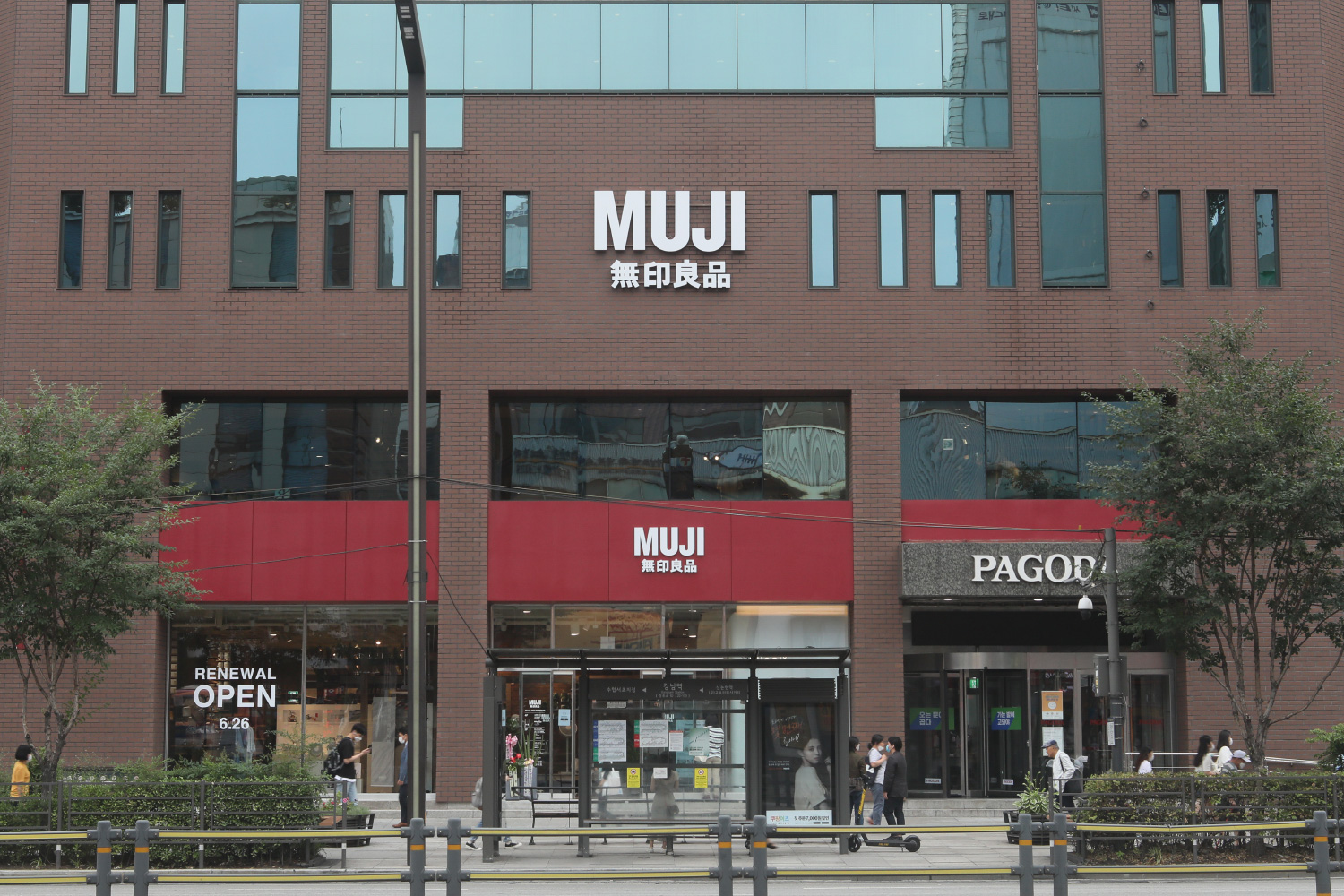
Flagship Store: They opened a massive store in Gangnam, displaying over 2,400 items.
-
New Channels: They entered Hyundai Department Store (Lotte's main competitor) and launched an official online store.
Instead of flash sales or celebrity ads, they focused on the basics: "Good Prices" and "Direct Experience." The result was a huge success. By 2018, sales reached 130 billion KRW(approx. $93 million).
However, unexpected external crises were waiting for them just around the corner. |
|
|
⬇️ The first flagship store "MUJI Gangnam" |
|
|
Phase 3 (2019–2022): The Period of Hardship
"Facing a Triple Crisis for Survival"
Starting in 2019, MUJI faced three major disasters at the same time, putting their survival at risk.
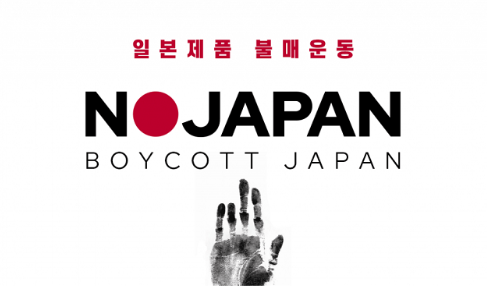
1. The "No Japan" Boycott. They were hit hard by the boycott movement caused by diplomatic tension between Korea and Japan. MUJI was targeted as a representative Japanese brand. Even loyal customers stopped visiting, and lists of "alternative brands" spread rapidly online. This caused not only a huge drop in sales but also deep damage to their brand image.
2. Rise of Local Rivals (JAJU). Shinsegae (Lotte's competitor)'s lifestyle brand, JAJU, had often been criticized as a "copycat" for having designs and packaging very similar to MUJI. However, during the boycott, JAJU became the perfect substitute. They took this opportunity to grow rapidly, increasing their store count from 174 to 256 within just 3 years (up nearly 50%).
3. The COVID-19 Pandemic. While the boycott was still hurting them, COVID-19 hit the world in 2020. MUJI’s strategy relied on large stores where customers could touch and experience products. Social distancing turned this strength into a weakness. Sales plummeted, but high fixed costs like rent and labor remained, forcing MUJI into a long tunnel of financial deficits. |
|
|
⬇️ A poster encouraging participation in the "No Japan" boycott |
|
|
Phase 4 (2023–Present): The Rebound
"Revitalizing Through Brand Experience"
After facing a crisis, MUJI went back to the drawing board to rethink its essence. In 2021, the headquarters declared a "Second Founding" and created a new long-term plan. They also changed their Korean partner from "Lotte International" to "Lotte Shopping" to strengthen local marketing. Their new initiatives can be summarized into three key strategies.
1. "Mega-Store Strategy" - Overwhelming Experience. MUJI Korea shifted its focus from small shop-in-shops to massive standalone stores. In 2023, they opened their largest store in Korea at Starfield Goyang (approx. 3,150 sqm). These large stores are designed to offer "experiences" that online shopping cannot provide. They transformed the store from a simple sales space into a lifestyle platform.
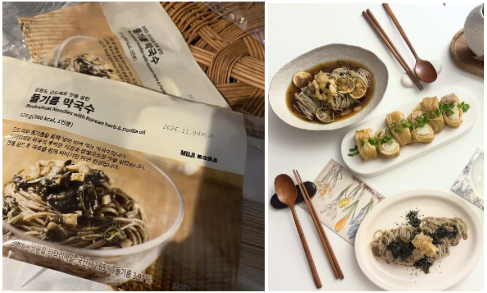
2. "Localization" - Blending into Korea. Their goal was to become "a brand helpful to the local region." They strengthened the "Found MUJI" project to discover local Korean ingredients and producers. A great example is the "Perilla Oil Makguksu" meal kit, made with ingredients from Gangwon Province. Unlike the past, where they simply imported Japanese products, collaborating with local producers helped close the psychological distance with Korean consumers. |
|
|
⬇️ A meal kit developed using local Korean specialties. (Source: MUJI) |
|
|
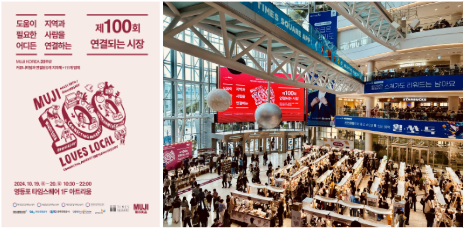
3. "Community" - Growing with Locals. They redefined their stores as community centers, not just commercial spaces. Through "Open MUJI," they host exhibitions and workshops. They also regularly run the "Connecting Market," where small business owners and farmers meet consumers directly. For instance, the 116th market held in February 2025 introduced 11 local brands from Tongyeong City to consumers in Seoul. These activities turned MUJI stores into a "neighborhood gathering place."
Thanks to these efforts, MUJI achieved record-breaking results in 2025:
Recognizing this potential, Lotte Shopping recently decided to invest an additional 20 billion KRW (approx. $14 million), showing strong confidence in MUJI’s future growth despite the tough market conditions. |
|
|
⬇️ The 100th "Connecting Market" featured 111 vendors from 9 different regions. (Source: MUJI) |
|
|
💡 Key Takeaways from MUJI’s Journey |
|
|
1️⃣ Philosophy is good, but the price must be convincing.
Korean consumers are very savvy and sensitive to price. No matter how great a brand's philosophy is, it will not work if the price is unreasonably high. MUJI’s early struggle in Korea was due to a pricing strategy that ignored local market reality. Reducing logistics costs to remove the "bubble" and matching the price level acceptable to consumers is a prerequisite for success.
2️⃣ Be a friendly neighbor, not just a foreign brand.
Doing business abroad means facing unexpected crises like diplomatic tensions or pandemics. The key to becoming a long-lasting brand is showing that you coexist with the local community. MUJI’s efforts to become a "neighboring brand"—such as developing products with local ingredients and hosting the "Connecting Market" with small businesses—will be their strength in weathering future storms.
3️⃣ Sell an irreplaceable spatial experience
Even with a unique concept, you cannot avoid competition from "copycat" brands backed by large capital or lower prices. In an era where online shopping is the norm, differentiating solely through product design or function is difficult. MUJI responded by building massive stores filled with books, exhibitions, and rest areas to encourage customers to stay longer. Providing immersive content that engages all five senses is the best way to prove the value of the "original" brand. |
|
|
Enjoyed this newsletter?
📬 Subscribe now!
We're taking a short break to recharge.
See you again on March 18, 2026!
We’d love your feedback!
|
|
|
Want to Share This Newsletter?
Just copy and paste the URL below
|
|
|
EDWORK
hello@edwork.jp | 4F, Tower B, 50, Jong-ro 1-gil, Jongno-gu, Seoul, 03142
|
|
|
|
|