📬 Newsletter on Korea’s Consumer Market
Hi there 👋
Welcome to the 3rd issue of Deep Dive Korea—your essential guide to the Korean market.
In this issue, we explore the latest import trends in Korea’s consumer electornics sector and highlight how SharkNinja, the U.S. appliance powerhouse, is shaking up the market with its local strategy.
Let’s dive in and get inspired! 🌊
|
|
|
📍In this issue
1️⃣ Korea's Import Trends #3: Consumer Electronics
2️⃣ How SharkNinja Wins Korean Consumers
|
|
|
Korea's Import Trends
PART 3 | Consumer Electronics🔌 |
|
|
What imported products are Korean consumers buying the most?
Deep Dive Korea reviewed 103 product categories across 11 consumer sectors— including fashion, footwear, bags, home appliances, furniture, toys, and kitchenware.
In our last issue, we covered furniture and kitchenware. (👉 Read here)
This time, we turn to consumer electronics — a market dominated by global giants like Samsung and LG. |
|
|
|
📉 Shrinking Domestic Market
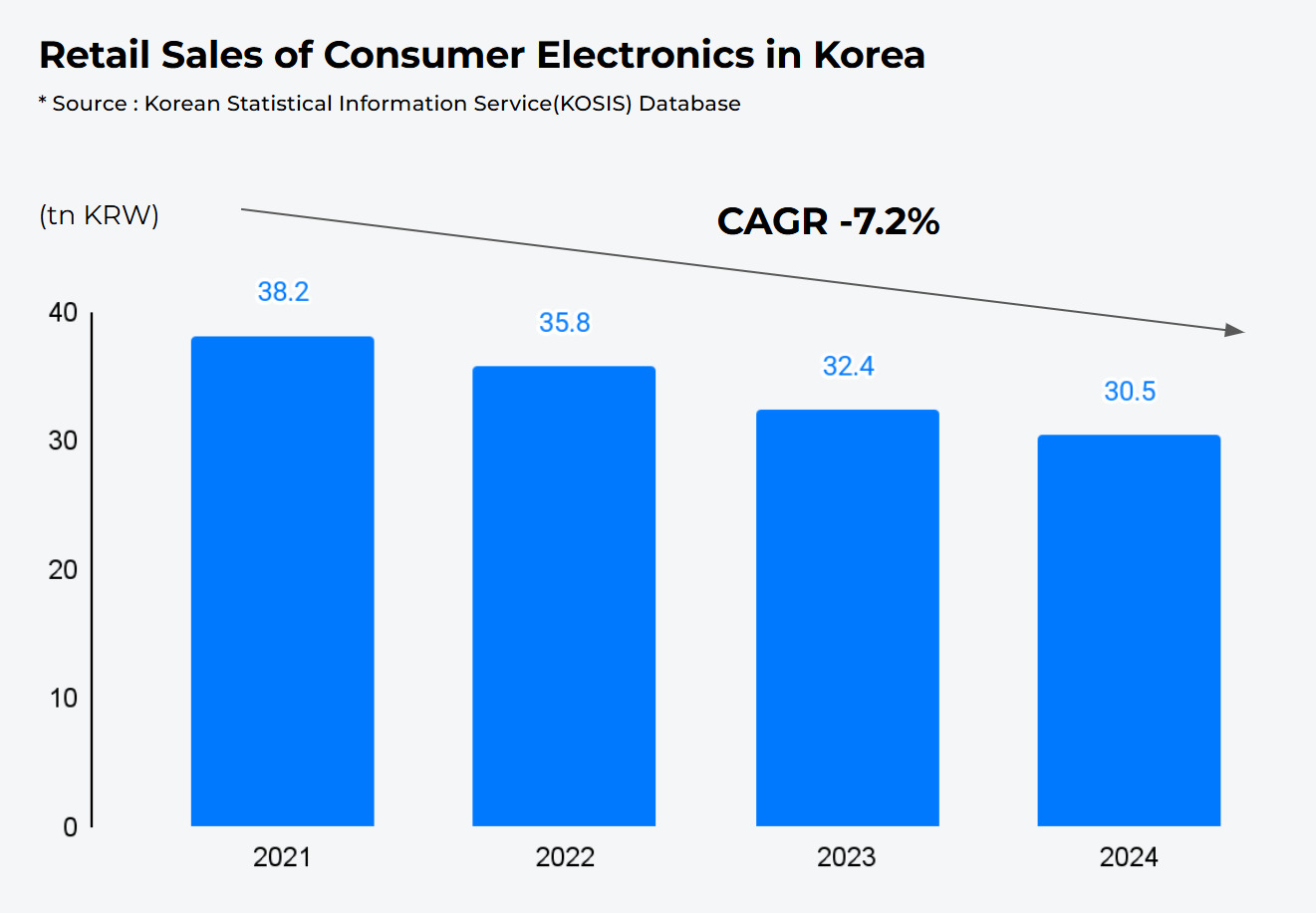
Korea’s consumer electronics market is shrinking fast. It fell from KRW 38.2 trillion (approx. USD 27.4 billion) in 2021 to KRW 30.5 trillion (approx. USD 21.9 billion) in 2024 — a 7.2% annual drop.
Rising inflation and higher interest rates are squeezing household budgets. As a result, consumers are cutting back on big-ticket purchases. On top of that, fewer marriages and relocations are further cooling demand.
|
|
|
|
🌍 Import Market Holding Ground
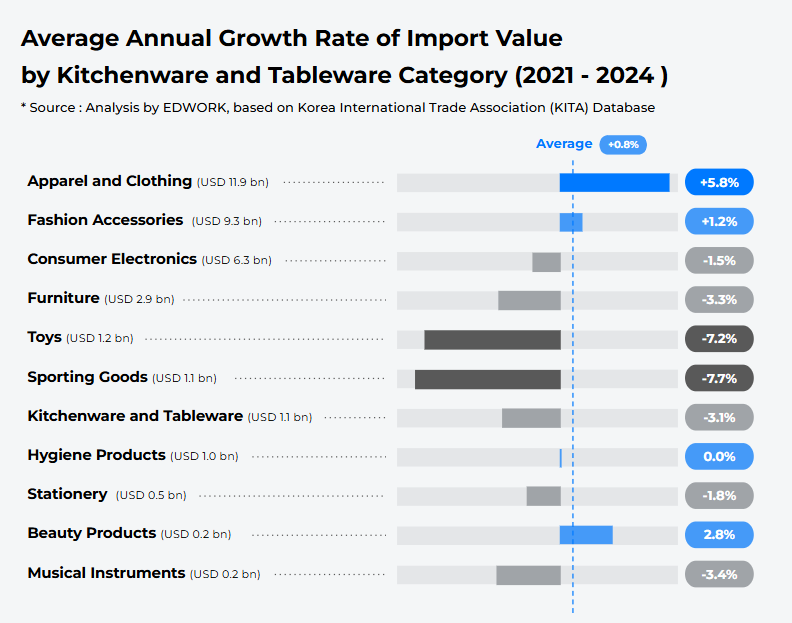
Despite the slump in domestic demand, imports are now slightly declining. Consumer electronics imports fell by an average of -1.5% per year over the past three years.
Even so, imports are maintaining a larger relative share compared to domestic brands. With Samsung and LG dominating the market, Korean consumers continue to seek differentiated products from foreign brands, keeping overseas offerings more prominent than ever.
|
|
|
|
✨ Lifestyle Shifts Reshape Import Market
Korea’s appliance import market is changing with cunsumer lifestyles.
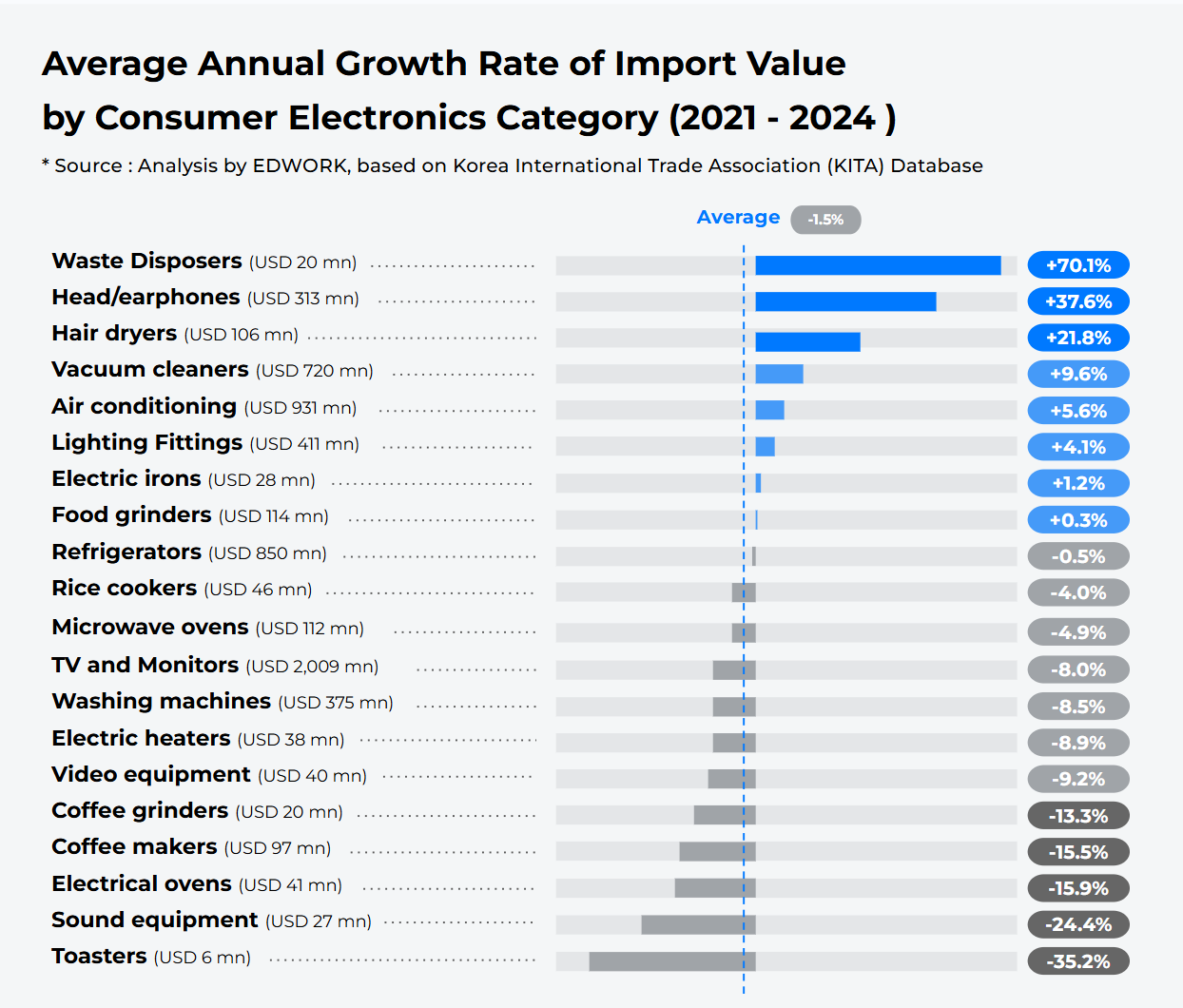
Small and personal devices such as food waste disposers (+70.1%), wireless headsets/earphones (+37.6%), and hair dryers (+21.8%) are growing rapidly. This reflects shifts such as increased awareness of kitchen hygiene, more remote work and streaming service usage, and a preference for premium beauty devices. Robot vacuums and cordless vacuums (+9.6%) are also steadily increasing in imports, supported by rising living standards.
In contrast, large appliances and cooking appliances are stagnant or declining. Refrigerators (-0.5%), TVs & monitors (-8.0%) and washing machines (-8.5%) have already reached market saturation, while rice cookers (-4.0%) and microwaves (-4.9%) are losing out due to the rise of dining out and food delivery. Coffee machines (-15.5%) and toasters (-35.2%) are also seeing decreased demand as the low-cost franchise coffee market grows as an alternative.
|
|
|
1️⃣ Import Market Gains Relative Share
Even though overall domestic sales are shrinking, imports are losing less ground and taking up a larger share of the market. Korean consumers are actively seeking products that local brands alone cannot satisfy. For global brands with differentiated technology and experiences, this is a strong opportunity to grow their presence in Korea.
2️⃣ Rising Demand for Hygiene, Convenience, and Personalized Products
Products like food waste disposers, wireless earbuds, beauty devices, and robot vacuums are growing fast as they align with changes in Korean lifestyles. Compared to traditional appliances dominated by Samsung and LG, these categories offer higher opportunities for global brands to enter. |
|
|
Curious about the Korean market?
Reach out to EDWORK. Let’s chat! |
|
|
How SharkNinja Wins Korean Consumers |
|
|
There’s a brand that beat Dyson to #1 in both the U.S. and U.K. markets. Meet Shark, the vacuum line from American appliance company SharkNinja. Even in Korea, where Samsung and LG dominate, Shark has been making waves with repeated sellouts on home shopping and online platforms. In this article, we break down the online viral marketing strategies that helped Shark quickly gain influence in Korea. |
|
|
Shark: A Home Appliance Brand Obsessed with User Convenience
Shark is a leading vacuum brand from the U.S., built around a core value of solving user inconveniences and enhancing convenience. Its lightweight design reduces wrist strain, bendable technology reaches tight spots, brush rolls prevent tangles, and one-touch dustbin removal adds extra convenience. These features have quickly won global attention. |
|
|
⬇️ Shark Vacuum in Use (Source: SharkNinja) |
|
|
📈 Sellout Streak in Korea
Interest in Shark vacuums has steadily grown in Korea. After the April 2024 launch of a new model, Shark sold over 30,000 cordless units within just eight months.
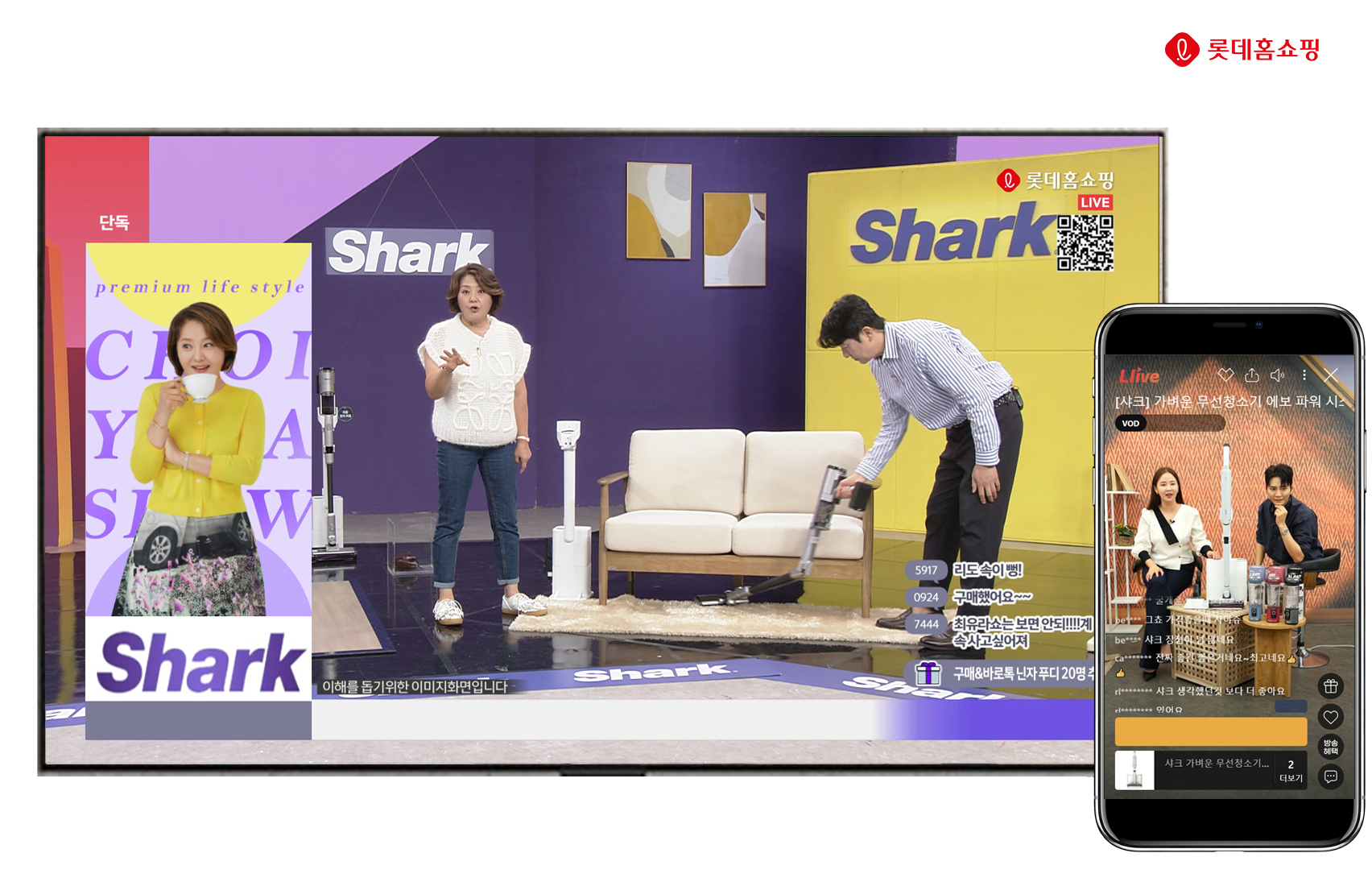
This success didn’t happen overnight. From the beginning, every sales push—whether through home shopping, online malls, or influencer group buys—ended in rapid sellouts. Key milestones include reaching 8,901% of its funding goal on Wadiz crowdfunding in 2019, selling 15,500 units across three runs on CJ Home Shopping’s Choi Hwa-jung Show in 2020–2021, and moving around 3,000 units across two runs on Lotte Home Shopping’s Choi Yu-ra Show in 2024.
|
|
|
⬇️ Shark Vacuums sold on Choi Yu-ra Show, one of Korea's top home shopping programs (Source: EDWORK) |
|
|
Shark’s 3 Viral Marketing Strategies in Korea |
|
|
Shark quickly gained traction in Korea with three key strategies:
1️⃣ Leverage Marketing – using the influence of others
2️⃣ Omnichannel Marketing – "available everywhere"
3️⃣ Influencer Group-Buys – generating user reviews
|
|
|
1) Leverage Marketing – Using the Influence of Others
Shark was new to Korea. To gain early awareness, it borrowed credibility from familiar names.
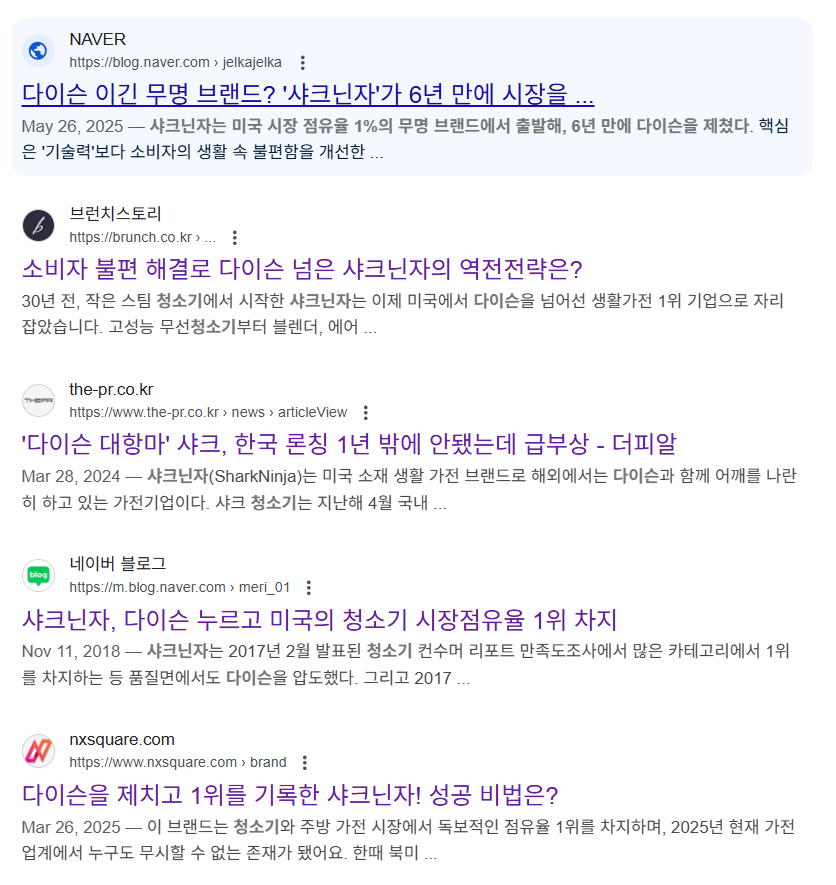
It smartly branded itself as “the vacuum that beat Dyson in the US and UK.” Bloggers and media picked up the phrase, helping it stick in people's minds.
On home shopping, it was nicknamed “Choi Hwa-jung’s vacuum” or “Choi Yu-ra’s vacuum,” and through YouTube PPL, it even became “Hong Jin-kyung’s vacuum.” By associating itself with these trusted figures, Shark rapidly built brand recognition among Korean consumers. |
|
|
⬇️ Numerous posts highlighting Shark vacuum’s advantages over Dyson |
⬇️ Choi Hwa-jung and Hong Jin-kyung introducing Shark vacuums on YouTube channel |
|
|
2) Omnichannel Marketing – "Available Everywhere"
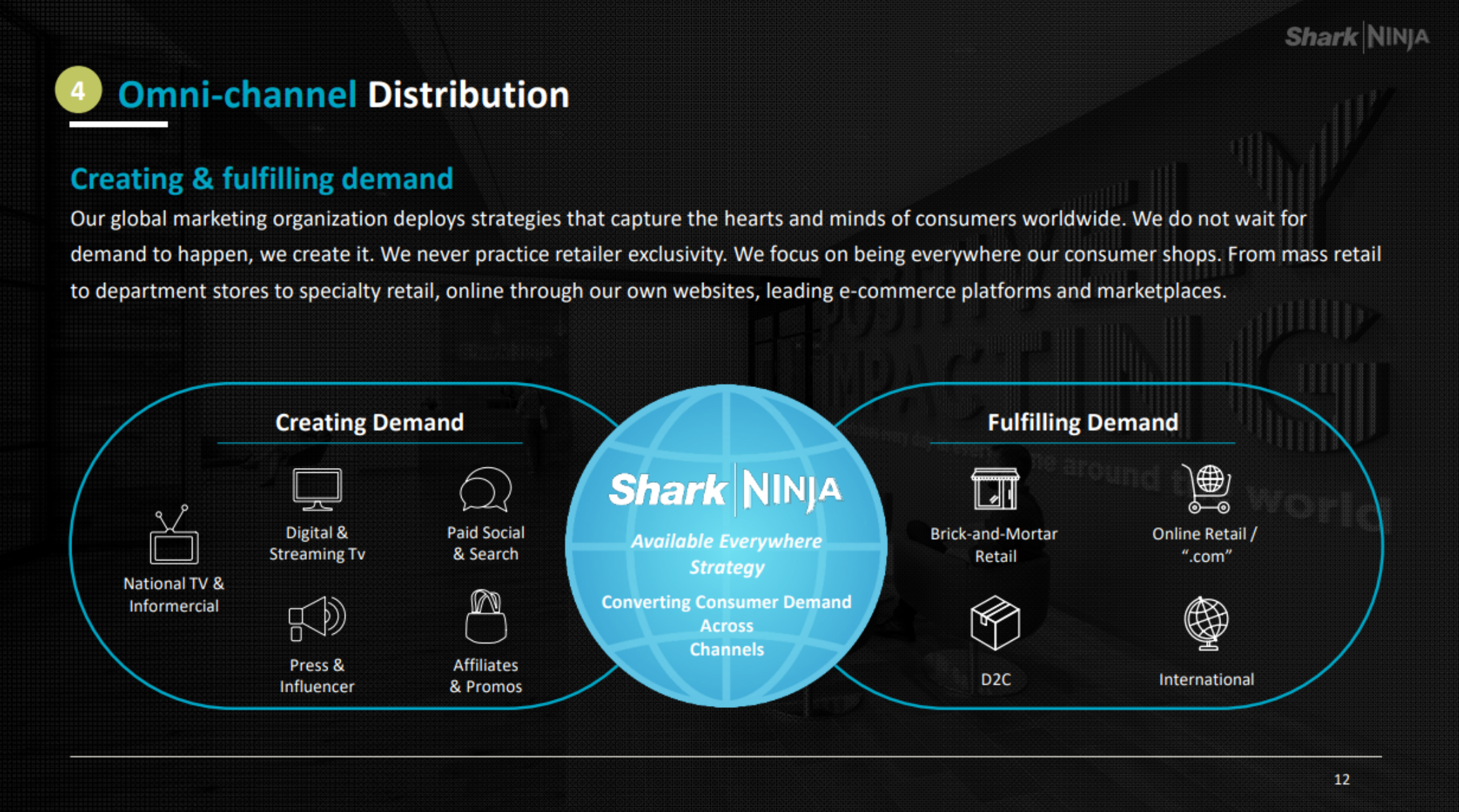
Shark markets aggressively across all customer touchpoints. But it’s not random. The headquarters centrally manages all channels using clear strategies and reliable data. Every message is based on customer insights and real usage experiences to build empathy and drive purchase.
Content comes in two types. Infomercials (10–30 min) explain new technologies and usage, produced annually by headquarters. Short-form content (15–30 sec) focuses on exposure and sales, shared on YouTube, Instagram, TikTok, and other social platforms. Customer feedback and data analysis create a self-reinforcing cycle for more effective content.
Shark follows the principle “available everywhere.” Products are accessible wherever customers are. No exclusivity—Shark sells in supermarkets, department stores, electronics shops, online malls, brand-owned stores, and e-commerce platforms. Shark products are so widely available, you can even spot them on unexpected sites like school uniform shops and funeral service platforms. |
|
|
⬇️ The marketing strategy section of SharkNinja’s corporate presentation |
|
|
3) Influencer Group-Buys – Generating User Reviews
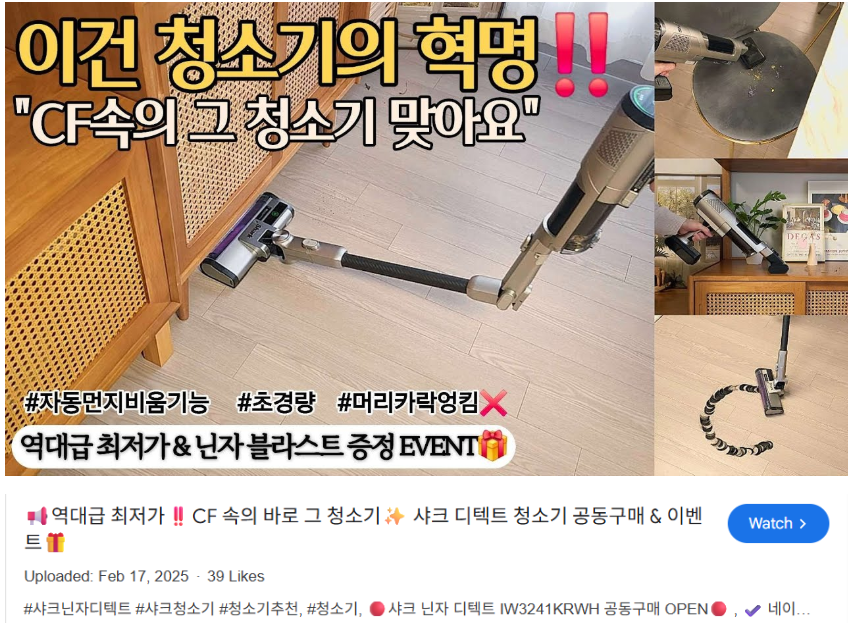
One of SharkNinja’s key strategies for 2025 is leveraging user-generated content (UGC) to tell product stories and spark new demand. In Korea, this happens through influencer group buys. Influencers share their own experiences, while participating consumers post photos and reviews. This result is a steady stream of creadible, multi-format content.
Shark runs 60–80 group-buys a year for vacuums, almost every 3–4 days. Each campaign features a limited quantity. While these group-buys also drive sales, their bigger value lies in generating content the brand can’t produce on its own, and in creating immediate new demand.
|
|
|
⬇️ Influencer Group-Buy Content Example (Source: Youtube) |
|
|
1️⃣ Leverage familiar brands and personalities
Using well-known competitor brands or celebrities that your target audience already recognizes can quickly boost awareness and trust. This is often faster than explaining your brand’s history or philosophy. However, avoid legal risks by not misrepresenting or disparaging others. Also, make sure the leveraged figure aligns with your brand values to prevent negative perceptions. Choose leverage targets carefully.
2️⃣ Consistency with clear strategy and data
Many brands focus on selective marketing. SharkNinja, however, exposes its brand across all customer touchpoints. Success comes from centralized management of all channels and content. Headquarters maintains a clear strategy and continually validates it with reliable data. Following trends or frequently shifting tactics is usually less effective than sticking to a consistent, evidence-based approach.
3️⃣ Influencer group-buys amplify UGC
Korean consumers rely heavily on peer reviews when making purchase decisions. User experiences and reviews are more persuasive coming from other consumers than from the brand itself. Influencer group-buys are not just a sales channel—they are a powerful way to generate and spread credible user-generated content (UGC) while creating new demand. |
|
|
Want to boost marketing impact?
Contact EDWORK! ↑ |
|
|
Enjoyed this newsletter?
📬 Subscribe now!
We’ll see you in two weeks,
on Wednesday, September 17.
We’d love your feedback!
|
|
|
Want to Share This Newsletter?
Just copy and paste the URL below
|
|
|
EDWORK
hello@edwork.jp | 4F, Tower B, 50, Jong-ro 1-gil, Jongno-gu, Seoul, 03142
|
|
|
|
|