📬 Newsletter on Korea’s Consumer Market
Hello, and welcome to the second issue of Deep Dive Korea, a newsletter made for global brand managers working on the Korean market.
In this edition, we look at the latest trends in Korea’s furniture and kitchenware imports. We also share a success story of German glass jar brand WECK and its localization strategy.
Discover fresh insights you can only find in Deep Dive Korea.
|
|
|
📍In this issue
1️⃣ What’s Trending in Korea’s Imports - Part 2: Furniture & Kitchenware
2️⃣ Germany’s Glass Jar Brand WECK: A Success Story in Korea
|
|
|
What’s Trending in Korea’s Imports
PART 2 | Furniture🪑 & Kitchenware 🍽️ |
|
|
What imported products are Korean consumers buying the most these days?
At Deep Dive Korea, we reviewed import growth across 103 categories in 11 consumer sectors, including clothing, footwear, bags, home appliances, furniture, toys, and kitchenware.
In the last issue, we looked at apparel and fashion accessories. (👉 Read the previous issue) This time, we’ll dive into the furniture and kitchenware market.
|
|
|
|
📉 Declining Furniture & Kitchenware Imports
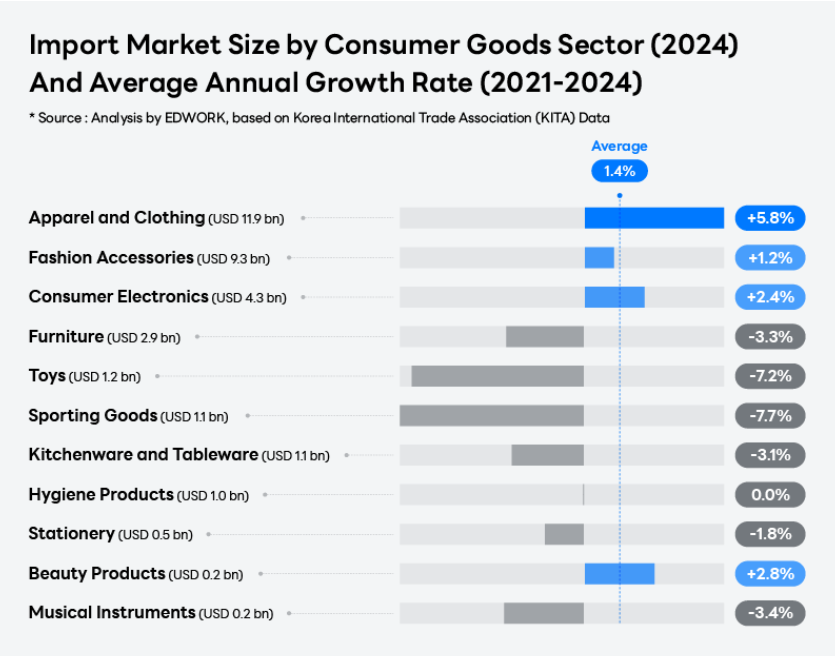
While Korea’s overall consumer goods imports are on the rise, furniture and kitchenware have been moving in the opposite direction.
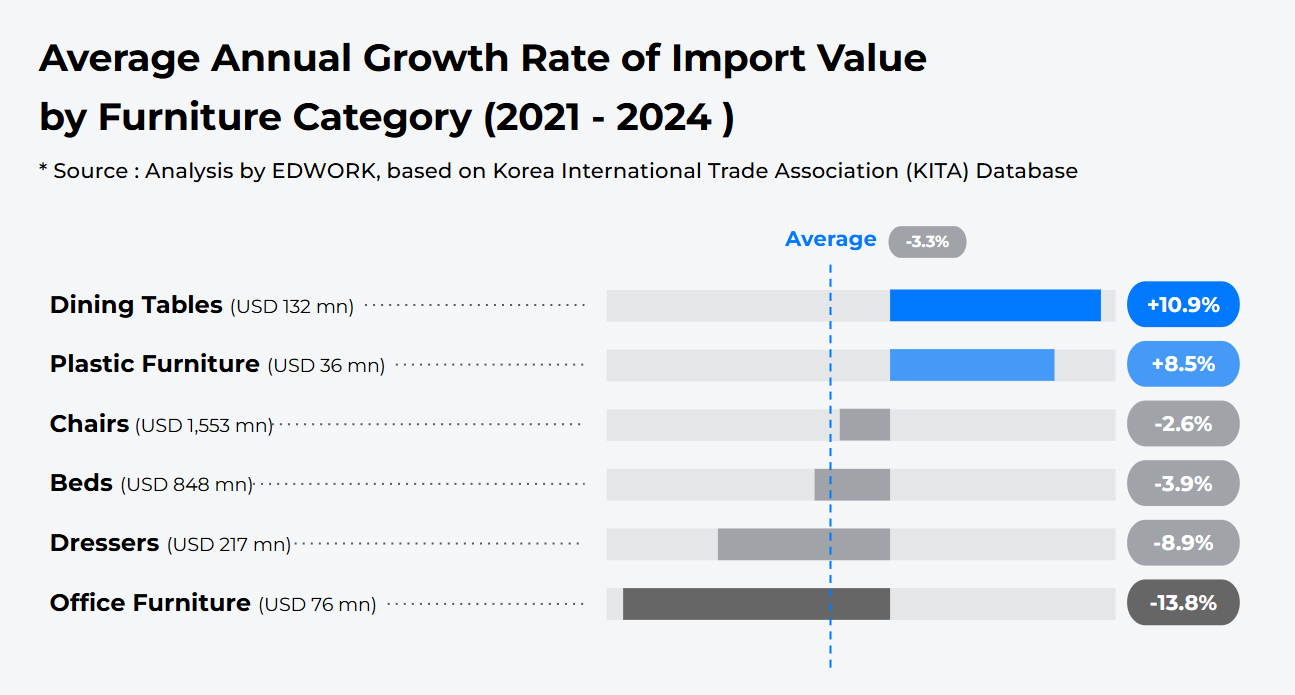
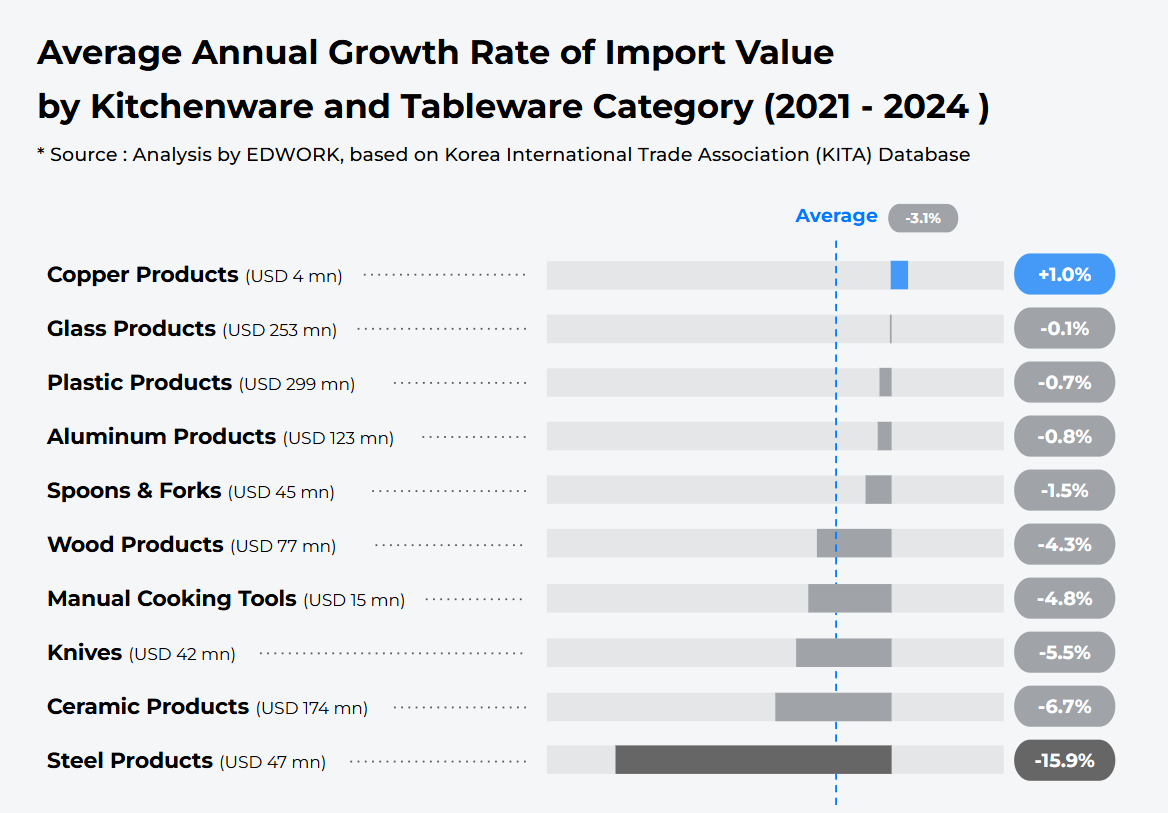
Since 2021, furniture imports have fallen by an average of 3.3% per year. Kitchenware imports declined by 3.1% per year.
Next, we’ll look at each category in more detail.
|
|
|
(1) Korea’s Furniture Import Market 🛋️
Post-COVID Slowdown & Strong Local Players
For global furniture brands, Korea remains a challenging market. After COVID-19, interest in home décor declined, causing a contraction in domestic furniture sales. In 2024, Korea’s retail furniture market stood at KRW 10.7 trillion (approx. USD 7.7 billion), down about 9% from 2021.
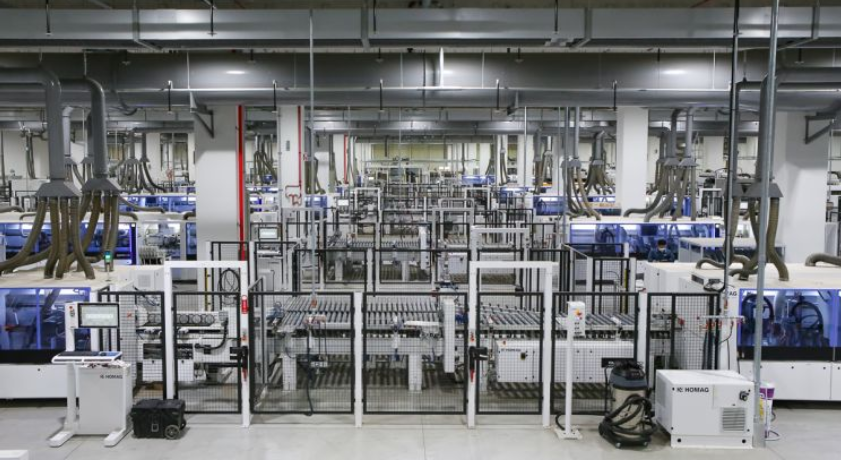
At the same time, leading local players such as Hanssem and Hyundai Livart have gained ground. Hyundai Livart, for example, posted KRW 1.9 trillion (approx. USD 1.4 billion) in sales in 2024, a 33% jump from three years earlier. This growth was driven by investments in smart factories and manufacturing innovation, boosting efficiency and enabling the company to respond more quickly to shifting consumer demand.
⬇️ Inside Hyundai Livart’s Smart Factory in Korea
|
|
|
🌱 Niche Growth Categories - Dining Tables & Plastic Furniture
While the overall furniture market is shrinking, only dining tables (+10.9%) and plastic furniture (+8.5%) have shown growth. Although these two categories currently make up just 5.9% of the imported furniture market, their share is steadily increasing.
In contrast, traditional large categories such as chairs (-2.6%), beds (-3.9%), dressers (-8.9%), and office furniture (-13.8%) all saw declining growth rates.
|
|
|
Premium Kitchen Furniture Gains Popularity in Luxury Apartments
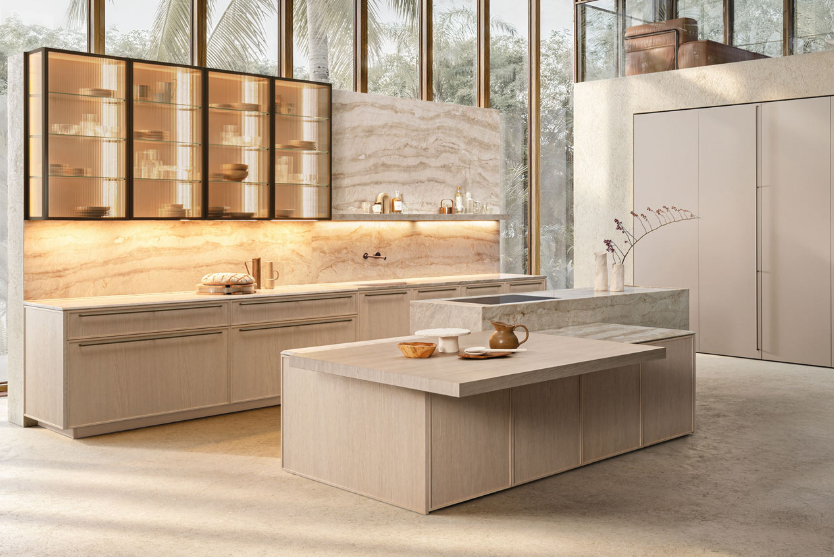
European premium kitchen furniture is becoming increasingly common in Korea’s redevelopment apartment complexes. In February, Italian brands Euromobil and Cesar were installed at Gaepo Xi Presidence in Gangnam. This November, German brands Bulthaup and Leicht are scheduled to be installed at The H Firstier I’Park in Gangnam.
This trend is also attracting new international brands to the Korean market. Over the past year, more than five Italian kitchen brands—including Primo Piano, Alta, and Astra—have launched in Korea.
⬇️ Euromobil’s kitchen system “Margo” (Source: Euromobil)
|
|
|
Lightweight and Practical Plastic Furniture on the Rise
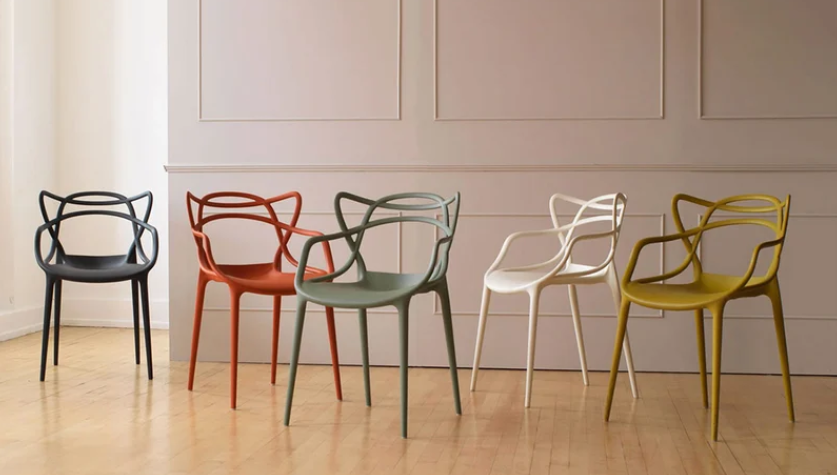
With more single-person households and small apartments, demand for plastic furniture is rising. Plastic furniture is popular because it is lightweight and easy to move.
The growing interest in plastic furniture shows an interesting market shift. Traditionally, furniture has been made mostly from wood and metal. Plastic furniture still accounts for only about 1% of the import market. But its low price, versatile designs, and wide color options suggest strong potential for growth.
⬇️ Plastic Chair by Italian Furniture Brand Kartell (Source: Kartell)
|
|
|
(2) Kitchenware and Tableware Import Market 🍴
Overall Decline Across Product Categories
Since 2021, Korea’s kitchenware import market has been steadily shrinking.
By material, only copper recorded slight growth (+1.0%). In contrast, glass (-0.1%), plastic (-0.7%), aluminum (-0.8%), wood (-4.3%), ceramic (-6.7%), and steel (-15.9%) all declined. By usage, spoons and forks (-1.5%), manual cooking tools (-4.8%), and knives (-5.5%) also decreased.
The main reason for this decline is falling demand. After COVID-19, food delivery and meal kits surged. This reduced the need for cooking at home, shrinking the domestic kitchenware market.
|
|
|
📉 Local Brands Lose Ground
The drop in kitchenware demand has hit Korean local brands hard.
In the tableware market, imports from the UK’s Denby and Portmeirion, and Denmark’s Royal Copenhagen, have grown since the mid-2010s. Domestic brands like Korea Ceramic and Haengnam Ceramic have struggled, with sales steadily falling. Korea Ceramic’s 2024 revenue dropped to KRW 17.2 billion (approx. USD 1.2 million)—just one-third of ten years ago.
The glass jar market shows a similar story. Low-cost Chinese products from IKEA and DAISO, along with premium imports like Germany’s Weck, are gaining market share. LocknLock, once the market leader, has faced declining sales and losses since 2022. The company is now working to improve profitability through production cuts and restructuring.
This weakening of local brands is expected to create more opportunities for foreign brands to enter Korea.
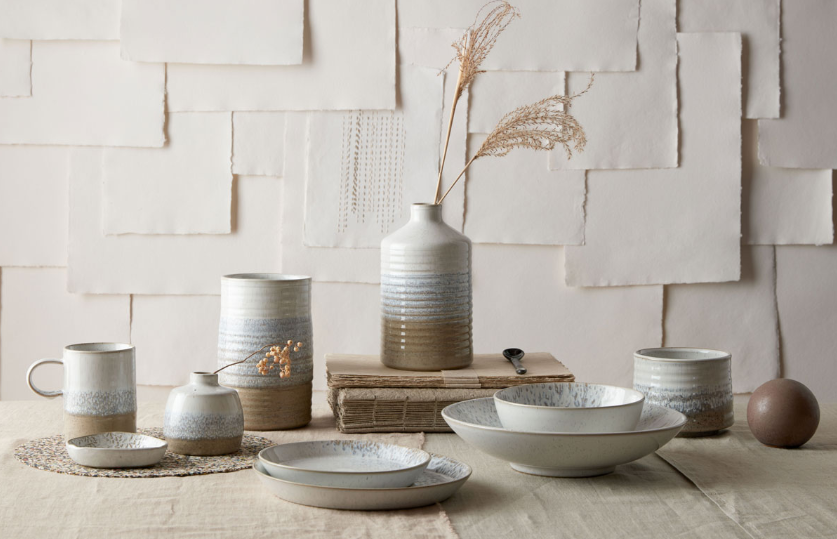
⬇️ Tableware Set by UK Brand Denby (Source: Denby)
|
|
|
1️⃣ Growth Opportunities in Niche Segments
The overall market is shrinking, but some niche categories are growing. Wooden kitchen furniture (+10.9%) and plastic furniture (+8.5%) are rising. Lightweight, easy-to-move plastic furniture is gaining attention as single-person households and small apartments increase.
2️⃣ Premium Market Remains Strong
High-end apartments, like redeveloped complexes in Gangnam, are adopting more Italian and German premium kitchen furniture. Consumers valuing premium lifestyles are increasing, leading to new launches by imported brands.
3️⃣ Weak Local Brands Open Doors for Foreign Players
Local brands such as Korea Ceramic and LocknLock are losing ground. This gives foreign brands a chance to expand quickly. The weakening of local competitors creates a prime opportunity to capture Korean consumers. |
|
|
Curious about the Korean market?
Reach out to EDWORK. let’s chat! |
|
|
Germany’s Glass Jar Brand WECK: A Success Story in Korea |
|
|
A brand’s true value shines in tough times. When demand drops and competition heats up, consumers pick brands they trust.
Korea’s imported kitchenware market is mostly stagnant, but some brands stand out. One of them is German glass jar brand WECK, which has successfully localized its marketing in Korea. |
|
|
WECK: Combining Tradition and Trendy Design
WECK makes glass storage jars for home use. Founded in 1902, it has earned global recognition over 120 years thanks to high quality and continuous R&D.
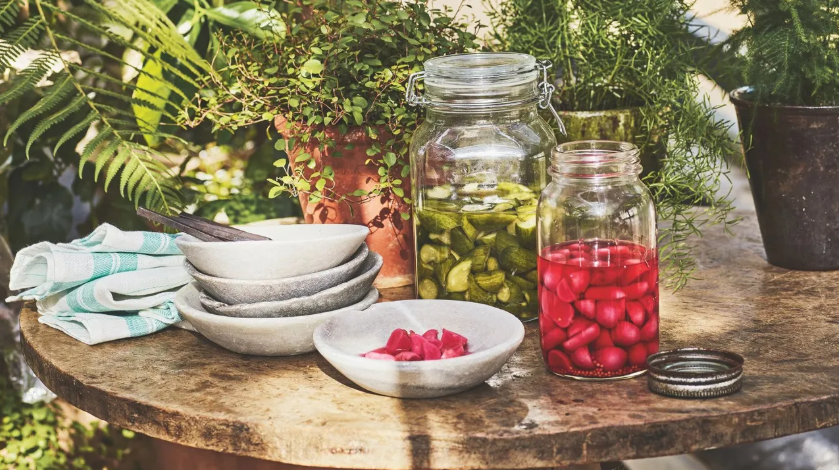
Recently, WECK jars are seen as stylish and versatile. Beyond storage, consumers use them as cocktail glasses, table décor, and flower vases. Celebrities and influencers on social media have also boosted the brand’s trendy image. |
|
|
⬇️ WECK Glass Jar in Use (Source: Home & Gardens) |
|
|
📈 WECK’s Performance in the Korean Market Over the Past Decade
WECK was officially introduced to Korea in 2015 through a local importer. Since then, the brand and importer have worked closely, steadily establishing WECK in the market.
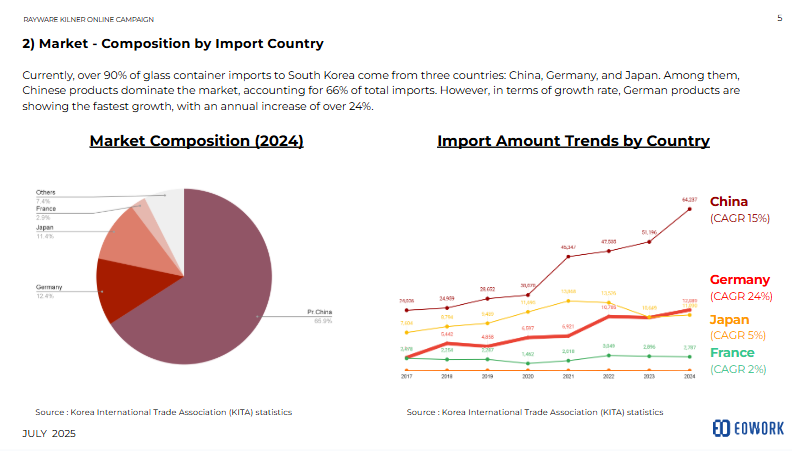
Exact sales figures aren’t public, but import data for German glass storage jars gives a clear picture of growth. Imports rose from USD 2.65M in 2017 to USD 12.1M in 2024—a 4.5× increase.
This means an average annual growth rate of about 24%, well above the 15% growth rate for Chinese imports. WECK has quickly secured a strong position in Korea. |
|
|
⬇️ Import Share and Trends of Glass Storage Jars by Country (Source: EDWORK) |
|
|
3 Keys to WECK’s Successful Localization in Korea |
|
|
WECK succeeded in Korea with three strategies:
1️⃣ Strong digital marketing and content exposure
2️⃣ Differentiated pricing based on demand
3️⃣ Customized products for local consumers |
|
|
1) Strong Digital Marketing and Content Exposure
From the start, WECK actively used online channels to build brand presence. They understood that in a crowded digital space, producing lots of content is key to standing out.
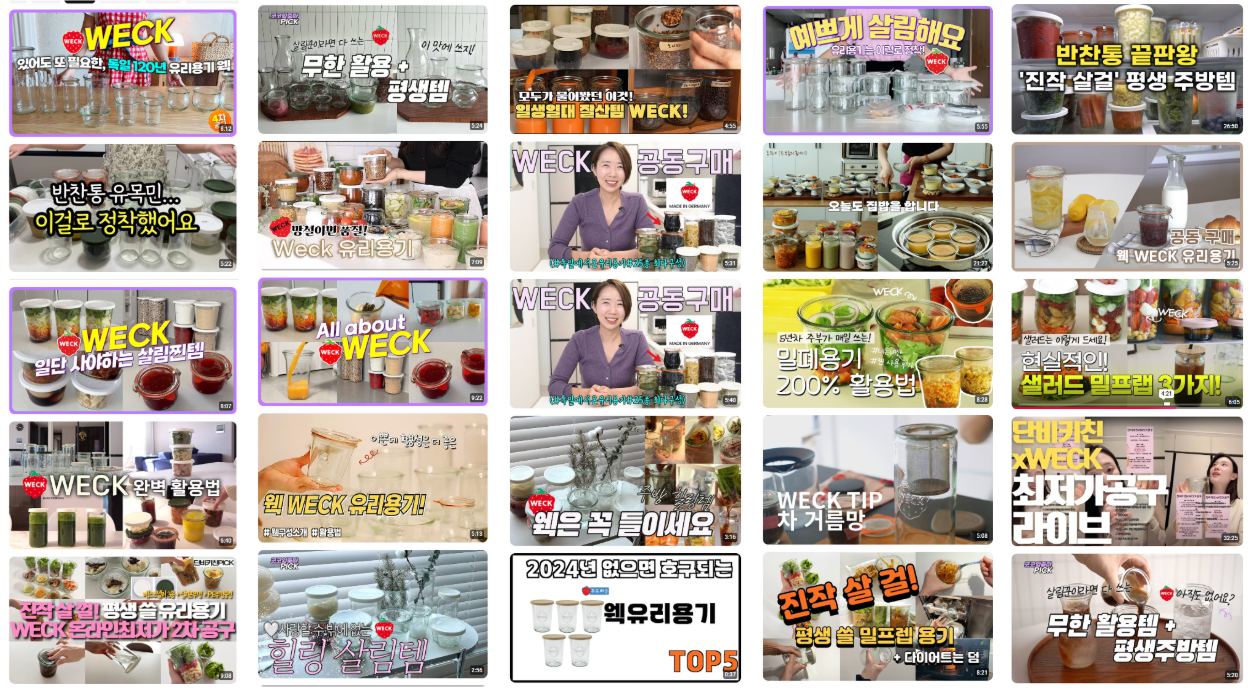
WECK posted 2–3 social media updates per day, sharing product introductions and use cases. Most brands post only 2–3 times per week, so WECK’s activity far exceeds the average.
Since last year, WECK has also promoted influencer-led group purchases 60–80 times per year. Using multiple influencer channels, they run nearly daily “lowest-price guaranteed” group buys—keeping the brand highly visible. |
|
|
⬇️ WECK Group Purchase Content (Source: Youtube) |
|
|
2) Differentiated Pricing Strategy Based on Demand
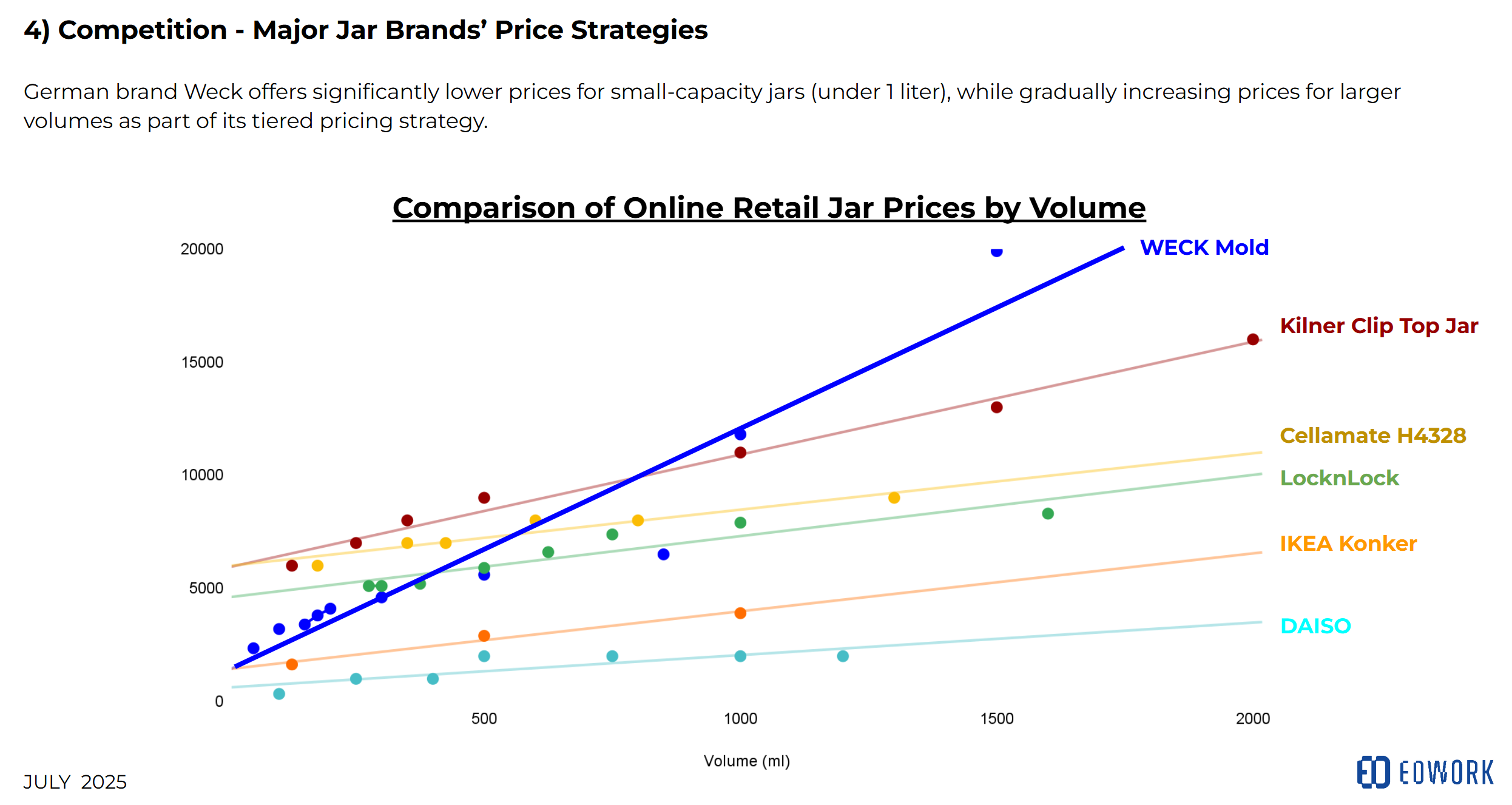
WECK applies a pricing strategy that reflects consumer demand. Small jars (under 500ml), popular with general consumers, are priced lower. Large jars (1,000ml and above), preferred by chefs and businesses, are priced higher. Comparing price curves by size shows WECK’s curve is steeper than competitors’.
Small jars are priced lower because general consumers are more price-sensitive than concerned with brand or quality. WECK also encourages bundle purchases for these smaller jars, allowing consumers to buy multiple at once. This approach helps offset losses from lower prices. |
|
|
⬇️ Online Retail Prices by Jar Size for Domestic Glass Storage Brands (Source: EDWORK) |
|
|
3) Customized Products Reflecting Local Consumer Needs
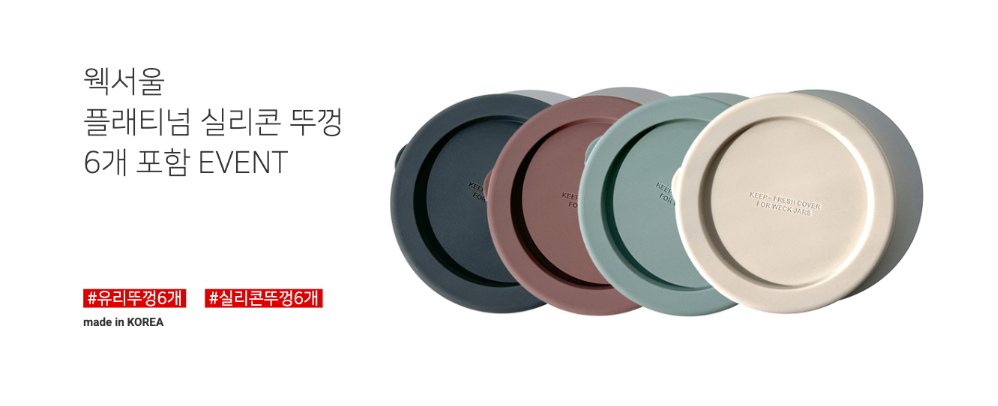
WECK launched silicone lids in Korea to match local preferences. They also offer promotions giving a silicone lid with purchases over a certain quantity. The easy-open-and-close design has been very popular with Korean consumers.
Previously, jars sealed with clips and rubber bands were great for long-term storage but less convenient for daily use. While suitable for European home canning, frequent opening was cumbersome for Korean consumers. The silicone lid solves this problem and is a great example of localization. |
|
|
⬇️ Silicone Lid Products Produced in Korea (Source: WECK Seoul) |
|
|
1️⃣ Quantity Matters in Digital Communication
WECK posts 2–3 times per day on social media and runs 60–80 influencer-led group purchases annually. This high volume boosts brand awareness and drives sales growth.
2️⃣ Detailed Pricing Strategy is Essential
Small jars for general consumers are priced lower, while large jars for professionals or businesses are priced higher. This approach secures both market share and profitability. Strategic pricing based on demand and competition creates differentiation.
3️⃣ Reflecting Consumer Needs for Successful Localization
Silicone lids make daily use simple and convenient. This increased brand awareness and favorability, strengthening WECK’s position in Korea. |
|
|
Want to boost marketing impact?
Contact EDWORK! ↑ |
|
|
Enjoyed this newsletter?
📬 Subscribe now!
We’ll see you in two weeks,
on Wednesday, September 3.
We’d love your feedback!
|
|
|
Want to Share This Newsletter?
Just copy and paste the URL below
|
|
|
EDWORK
hello@edwork.jp | 4F, Tower B, 50, Jong-ro 1-gil, Jongno-gu, Seoul, 03142
|
|
|
|
|